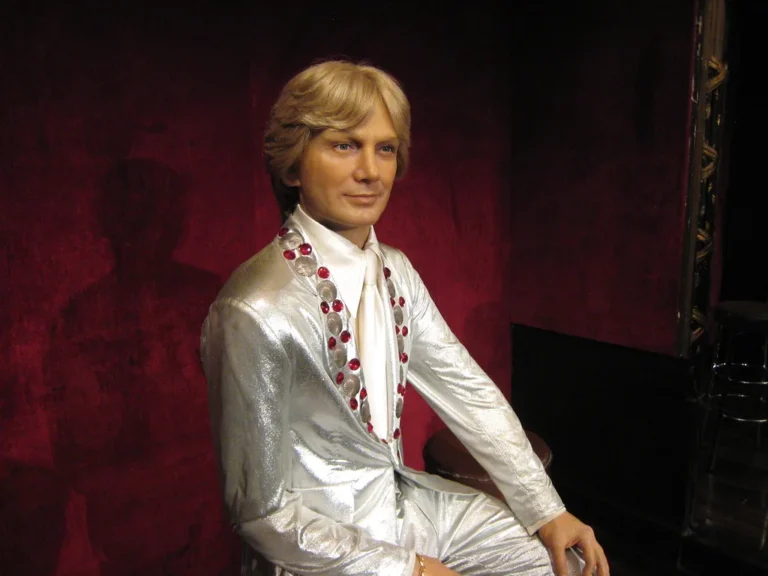

Claude François, one of the most iconic singers of the 1960s and 1970s, left a deep mark on French popular culture. His influence reached far beyond music, extending to fashion, the media and even cinema. His relationship with the press, however, was complex, shifting between admiration and criticism.
Through the archives of Podium magazine, a contrasting portrait of this charismatic artist emerges. The press of the day highlighted his boundless ambition and constant need to reinvent himself. For example, Claude François founded Absolu magazine in 1974, an ambitious project that reflected his desire to control his public image.
Accounts from people close to him, such as his press officer Marie-Thérèse Perrin, reveal a multifaceted personality. “He was both generous and demanding, capable of terrible outbursts of anger, but also of great kindness,” she says. This complexity undoubtedly contributed to his legend.
The press played a central role in shaping his image. Some media outlets, including Europe 1, sometimes dismissed him as an “old-fashioned” singer. To counter that perception, Marie-Thérèse Perrin arranged dinners with media representatives, drawing attention to his artistic versatility and dedication to his fans.
Despite these efforts, Claude François’s image remained divided. Fans revered his talent and authenticity, while some critics regarded him as too commercial. This contrast appears in the archives of Podium, whose excerpts show both his charisma and his tensions with the media.
Today, his legacy remains undeniable. Photography exhibitions he directed, such as one planned for the European Nude Photography Festival in Arles, attest to his lasting influence. His relationship with the media reminds us that a public figure can both captivate and disappoint, leaving a complex but unforgettable legacy.
Historical and media context
The 1960s and 1970s marked a turning point in the French media landscape. During this period of social and political upheaval, a mass press emerged and played a key role in shaping public opinion. In France and Belgium, media outlets began to adopt more uniform formats, with more structured presentation and modern distribution methods.
The media landscape of the 1960s and 1970s
At the time, newspapers and magazines, along with radio and television programmes, dominated. Music charts, including those broadcast on Europe 1, strongly influenced public perception. The media used successes and scandals to shape artists’ images, often creating a mixed public impression.
For example, programmes such as Salut les copains and magazines such as Podium played a central role in promoting or criticising artists. These outlets, often drawn to sensational stories, helped create an ambivalent image of certain public figures.
How the era influenced the artist’s image
The 1960s and 1970s were marked by political and cultural crises. Influenced by this climate, the press of the day tended to amplify controversy. For example, the 1968 protests and the 1995 strikes received contrasting coverage that brought social tensions to light.
The media often used successes and scandals to capture public attention. This approach significantly affected how artists were perceived, sometimes producing an image divided between talent and controversy.
| Event | Impact on the media | Influence on public image |
|---|---|---|
| 1968 strikes | Emphasis on public disorder | Perception of the artist as a rebel |
| Rise of music charts | Standardisation of musical success | Rapid recognition of artists |
| Media scandals | Focus on controversies | Ambivalent image of the artist |
The media of the period left a lasting legacy. Archives such as those of Podium magazine offer a distinctive view of the era. They show how the media shaped artists’ images, sometimes using their successes and scandals to attract attention.
To learn more about the media’s influence during this period, archives remain a valuable source.
Claude François and the media: How did the press see him?
The press’s view of Claude François reflects a clear divide between admiration and criticism. Throughout his career, the media often highlighted his artistic ambitions and charisma, as well as the controversies surrounding him.
Early media portrayals emphasised his musical talent and influence on popular culture. Some publications, however, also pointed to his demanding nature and turbulent relationships. Articles in Podium, for example, described his artistic versatility alongside his legendary outbursts.
Key moments in his life, such as the founding of Absolu magazine in 1974, received heightened media attention. These events helped build a contrasting public image in which talent and controversy were intertwined.
| Event | Media impact | Influence on public image |
|---|---|---|
| Founding of Absolu | Attention drawn to his ambition | Strengthening of his image as a leader |
| Sold-out concerts | Emphasis on his success | Recognition as a major artist |
| Personal scandals | Focus on controversies | Ambivalent image |
These media accounts left a lasting mark on collective memory, creating a figure who remains both fascinating and complex.
The press’s influence on the artist’s career
The press played a decisive role in the career of this iconic artist. It drew attention to his talents and explored the controversies around him.
Coverage of successes and scandals
The media widely reported his successes, adding to his fame. They were also quick to reveal scandals that punctuated his career. This contrast reinforced his complex image.
| Event | Media impact | Effect on public image |
|---|---|---|
| Launch of Absolu magazine | Attention drawn to his ambition | Consolidation of his status as a versatile artist |
| Sold-out concerts | Emphasis on his popular success | Strengthening of his leading position |
| Personal scandals | Focus on controversies | Ambivalent image, between talent and controversy |
Interactions between the artist and the public
These interactions were crucial. Fans admired his authenticity, while critics highlighted his commercial side. This contrast marked his career.
Media strategies, such as dinners arranged by his press officer, helped sustain his image. Public reactions sometimes differed from what these efforts sought to achieve, however, revealing a mixed perception.
Previously unseen archives and Podium magazine
Previously unseen archives from Podium magazine offer a distinctive look at Claude François’s career and personality. Created by the artist himself, the magazine played a central role in shaping his public image.
The magazine’s origins and development
Podium magazine was founded in 1972 to promote music and popular culture. It quickly became a key source for understanding its founder’s artistic world.
What the facsimiles reveal
Facsimiles of original notes preserved in the archives reveal lesser-known aspects of his personality. These documents show a constant pursuit of perfection and meticulous attention to every detail.

The book Claude François: His Confidential Notes, published in 2018, brings these valuable documents to light. They offer a distinctive view of his creative process and his interactions with his team.
| Aspects of the archives | Revelation | Impact on perception |
|---|---|---|
| Facsimiles of notes | Meticulous planning | Image of perfectionism |
| 2018 edition | Creative process | Deeper understanding |
| Preservation | Artistic commitment | Lasting legacy |
These archives remain an essential source for researchers and fans, offering a distinctive view of his artistic world.
The media image and the private person
The divide between Claude François’s public image and private life remains a source of fascination. The media often presented a charismatic figure, but the reality was much more complex.
Contradictions between public and private life
While the spotlight illuminated his talent as a singer, his private life was turbulent. Some accounts describe a demanding man, sometimes quick to anger, but also capable of great kindness.
This contrast contributed to his legend. Fans saw him as an authentic artist, while critics emphasised his commercial side.
Critical accounts and praise
The archives reveal differing opinions. Some journalists praised his ambition and influence on French popular song, while others criticised his difficult temperament.
Despite these contradictions, his legacy is undeniable. Key moments, including his sold-out concerts, reinforced his status as an icon.
Analysis of posthumous media narratives
The death of a public figure can prompt a reassessment of their legacy. In the media, posthumous narratives play a key role in turning a career into a legend. Often charged with emotion, these accounts raise questions about the accuracy of the facts they present.
By repeating these narratives, the media help reinforce the legend. For example, recent articles have highlighted urban legends surrounding his career. Although compelling, these stories raise ethical questions about their authenticity.
| Aspect of the narratives | Media impact | Influence on public image |
|---|---|---|
| Urban legends | Amplification of myths | Strengthening of legendary status |
| Archival documents | Verification of information | Authentication of facts |
| Copyright debates | Questions about use of his image | Protection of his legacy |
Although these posthumous accounts enrich collective memory, they must be checked against the archives to avoid distortions. Today’s media landscape shows a shift in perception in which rights and ethical questions occupy a central place.
How public statements affected his fame
Public statements played a central role in Claude François’s career, shaping his image and strengthening his presence in entertainment. These often intense appearances helped build a legend around his personality.
The influence of memorable interviews
Interviews given by Claude François, particularly the one published in The Guardian, offer a distinctive view of his artistic vision and outlook on the world. These sometimes controversial exchanges reinforced his status as a complex, charismatic artist.
Magazines such as Podium gave these interviews extensive coverage, highlighting lesser-known sides of his personality. These publications helped advance his career and sparked debate in the arts world.
| Interview | Impact | Result |
|---|---|---|
| Interview in The Guardian | Greater recognition | Stronger international image |
| Publication in Podium | Attention drawn to his artistic versatility | Consolidation of his leading status |
| Controversial statements | Controversies sparked | Ambivalent but memorable image |
These public statements marked his career and influenced how the public and the media perceived him. By making them part of his communications strategy, Claude François established himself as a major figure in entertainment.
To learn more about the media’s influence on artists’ careers, you can consult this in-depth study.
The role of music charts in building the legend
Music charts played a key role in shaping the public image of some musicians. Often seen as measures of success, these rankings were used strategically to raise artists’ profiles.
Manipulation and perceptions of success
It is well established that charts were sometimes manipulated to promote particular songs. For example, mass telephone calls were used to influence radio rankings. Although questionable, these practices helped create an illusion of enormous popularity.
Statements the artist made before a concert at the Albert Hall illustrate this reality. “The system is a circus, but it’s our circus.” These words point to an industry in which image and marketing often took precedence over artistic quality.
Effect on collective memory
Manipulated charts had a lasting effect on public perception. They helped build legends around certain songs, even when their actual success was sometimes exaggerated. This dynamic reinforced the idea of an untouchable artist whose every release was an event.
The book about his confidential notes and photographs from the exhibition at the photography centre reveal how these strategies were put into practice. These documents show a desire to control both the music and the story told about it.
In conclusion, while charts helped build a legend, they also exposed tensions between authenticity and manipulation. This contrast continues to fascinate and offers a distinctive view of the music industry of the period.
His entrepreneurial side and management of his image
Through his involvement in various media projects, this public figure combined artistic talent with business sense. His ability to innovate amid rapid change marked his era.
Involvement in the press
The launch of Podium magazine in 1972 shows his ambition. The project, which he supervised in full, allowed him to control his image and present an idealised version of his career. This communications tool played a key role in building his legend.
By founding Podium, he promoted his music and influenced popular culture. The magazine became a reflection of his artistic world, offering a distinctive look at his personality.
Communications and marketing strategies
Although questionable, his strategies helped create an illusion of enormous popularity. For example, he influenced music charts to reinforce his iconic status. However debatable, these practices shaped his image as an untouchable star.
He used the media to shape his image, arranging dinners with media representatives and staging public events. These actions helped advance his career and sparked debate in the arts world.
In conclusion, his entrepreneurial approach marked the music industry and redefined the communications strategies of the time. His legacy remains a source of inspiration for artists and communications professionals today.
To learn more about his influence on the media, you can consult this in-depth study.
Critical reactions and questions about the media system
Criticism of the media system brings deep-seated problems to light. Some analysts, including Thierry Maricourt, argue that the media tend to amplify clichés to make stories more sensational. This tendency has contributed to a distorted perception of some public figures.
Recurring clichés used by journalists, such as an excessive focus on scandals, have been criticised by professionals including Georges Moustaki. Although profitable, these practices undermine the media’s credibility and the quality of information.
Critics also point to cases of information being manipulated. For example, they have condemned the biased selection of facts and the spread of one-sided information. Such conduct raises ethical questions about the media’s role in shaping public opinion.
| Aspect criticised | Impact on perception | Example |
|---|---|---|
| Media clichés | Distorted perception | Focus on scandals |
| Manipulation of information | Loss of credibility | Spread of one-sided information |
| Sensationalism | Distortion of reality | Amplification of events |
These criticisms raise questions about how the media system needs to change. They call for deeper reflection on journalistic practices and their impact on public opinion.
Conflicting accounts and opinions in the press
Contradictory accounts in the press reveal a complex image, marked by differing opinions on how he managed his image and career. Drawn from interviews and news bulletins of the time, these accounts highlight disagreements among journalists, critics and people close to him.
Journalists’ and critics’ views
Some journalists highlighted his ambition and influence on French popular song, while others criticised his difficult temperament. These differences of opinion helped build an ambivalent image.
| Journalists | Critics | People close to him |
|---|---|---|
| “His talent was undeniable” | “He was too commercial” | “He had a multifaceted personality” |
| “He revolutionised music” | “His behaviour was unpredictable” | “He was both demanding and generous” |
These accounts raise questions about the accuracy of the reported facts. Some refer to agreements and confrontations that marked his career.
In conclusion, these differing opinions offer a distinctive perspective on his career, reflecting both his talent and the controversies that surrounded him.
The Belgian press’s influence on his legacy
Media coverage in French-speaking Belgium played a significant role in shaping this artist’s public image. Compared with the French press, Belgian outlets often took a more detailed and nuanced approach.
Reception in French-speaking Belgium
In Belgium, the media offered a more in-depth analysis of his career. Local magazines, for example, published detailed articles on his musical influence and cultural impact. This coverage helped strengthen his status as a major artist.
Recent research suggests that this media attention reached different generations. Younger people aged 18 to 25 were particularly responsive to his artistic versatility.
Comparison with the French press
While the French press sometimes emphasised controversies, Belgian media outlets favoured a more balanced view. This difference influenced perceptions of his legacy.
| Aspect | Belgian press | French press |
|---|---|---|
| Coverage | More detailed and nuanced | Focus on controversies |
| Target audience | Wide range of ages | Mainly adults |
| Approach | Musical and cultural analysis | Emphasis on showmanship |
These differences influenced how he was received during his career and have shaped his legacy today.
To learn more about the media’s influence on artists’ careers, you can consult this in-depth study.
Coverage of controversies and media scandals
Controversies and media scandals marked this artist’s career, affecting both his public image and professional path. Founded in 1972, Podium magazine was a key tool for controlling his image, but it also became a source of numerous disputes.
Controversies surrounding Podium magazine
Podium magazine was created to promote music and popular culture, but it quickly became a means of controlling his public image. Revelations exposed internal tensions and questionable practices, prompting sharp criticism.
These controversies had a significant impact on his career, particularly at key moments in May and during other critical periods.
Effects on his career
Scandals linked to Podium had direct consequences for his career. Events such as revelations about the magazine’s internal operations damaged his public image.
| Event | Media impact | Effect on his career |
|---|---|---|
| Controversies surrounding Podium | Amplification of controversies | Mixed public image |
| Scandals in May | Focus on internal tensions | Loss of public trust |
| Manipulation of music charts | Questions about authenticity | Negative effect on credibility |
These events showed the difficulties of managing media crises and the lessons future generations can draw from them.
The legacy in books, documentaries and interviews
Claude François’s legacy extends far beyond his recordings. Books, documentaries and interviews continue to keep his memory alive, offering a distinctive perspective on his career and cultural impact.
Recent analyses and notable publications
Recent publications, such as the biography Claude François: A Legend in Words and Images, offer an in-depth look at his life and work. They highlight lesser-known aspects of his personality and career, enriching our understanding of his legacy.
Often accompanied by archival documents, these analyses provide a clearer understanding of his influence on French popular song. A recent critical essay, for example, explores how his songs reflected the social changes of the 1960s and 1970s.
The biopic and its contemporary challenges
A biopic project led by Jérémie Renier has attracted considerable interest. The film promises to explore his musical career and the challenges he faced. Its central challenge is to capture the essence of his personality and his era.
Fans and critics eagerly await the film, which could renew Claude François’s public image. The filmmakers face the challenge of balancing authenticity and spectacle while remaining faithful to the artist’s spirit.
| Medium | Impact | Public reception |
|---|---|---|
| Biography | Deeper knowledge | Growing interest in his career |
| Documentary | Presentation of previously unknown facts | Enthusiasm among younger generations |
| Biopic | Renewed image | Anticipation among fans and critics |
These different media keep his legacy alive, giving new generations a way into his music and story.
Comparison with other legends of French popular song
The French music scene of the 1960s and 1970s produced several icons, each with a distinct identity and influence. Comparing some artists with legends such as Jacques Brel or Serge Gainsbourg reveals striking similarities and differences.
One notable similarity is their ability to manage communications strategies. For example, although Jacques Brel announced his retirement from music in 1966, his songs reached an international audience through musicals. Likewise, the media strategies used by these artists helped strengthen their iconic status.
Musically, charts played a key role in shaping their public images. Their hit songs, often at the top of the rankings, increased their fame. Yet sales figures and marketing stunts sometimes obscured artistic authenticity.
| Artist | Media strategies | Musical impact |
|---|---|---|
| Jacques Brel | Cancelled concerts, withdrawal from the media | Musicals reaching international audiences |
| Serge Gainsbourg | Provocation and scandals | Influence on French popular song |
| Other icons | Partnerships and collaborations | A series of successful albums |
In conclusion, while some artists share traits with other legends, their distinctiveness lies in their ability to combine music, strategy and showmanship. Their legacy continues to shape the French music landscape, offering a distinctive blend of talent and spectacle.
Conclusion
The career of this iconic figure of the 1960s and 1970s remains marked by a fascinating contrast. The media played a central role in building his legend, highlighting both his artistic talent and the controversies around him. This contrast appears in public opinion, where fans’ admiration coexists with criticism from some journalists.
The archives and accounts examined throughout this article offer a distinctive perspective on his legacy. They show how media strategies, scandals and successes helped shape his image. Today, his influence lives on through his music and through the books, documentaries and interviews that preserve his memory.
Revisiting these accounts helps us better understand the cultural phenomenon he represents. His story invites reflection on how the media have changed and how they affect perceptions of artists. As fans continue to celebrate his legacy, media professionals can use this analysis to reconsider their approach to communicating about artists.
FAQ
How did the media influence Claude François’s career?
How did Claude François manage his media image?
How did his death affect his fame?
What are the main controversies surrounding Claude François?
How is Claude François regarded today?
What role have fans played in preserving his work?
What are Claude François’s best-known songs?
How did Claude François influence French music?
What was his relationship with his audience?
What role did he play in the development of the media?
Source links
- https://journals.openedition.org/terrain/2969
- https://www.ladepeche.fr/article/2012/03/14/1305855-elle-a-vecu-les-derniers-instants-de-cloclo.html
- https://www.leparisien.fr/info-paris-ile-de-france-oise/claude-francois-photographe-erotique-a-dannemois-25-01-2014-3527053.php
- https://www.acrimed.org/Les-medias-face-au-mouvement-social-de-la-fin
- https://www.culture-rp.com/relations-presse-medias/medias-et-journalistes-il-est-grand-temps-de-changer-nos-pratiques/
- https://www.musicme.com/Claude-Francois/biographie/
- https://www.lejdd.fr/Culture/le-megot-et-les-enfants-caches-de-claude-francois-3572222
- https://books.openedition.org/ms/590
- https://www.erudit.org/fr/revues/haf/2007-v60-n3-haf1704/015961ar.pdf
- https://journals.openedition.org/volume/1682?lang=en
- https://fr.wikipedia.org/wiki/Michel_Sardou
- https://www.institutdiderot.fr/wp-content/uploads/2019/12/lavenir-de-la-communication-politique-Page.pdf
- https://dumas.ccsd.cnrs.fr/dumas-03818147v1/document
- https://larevuedesmedias.ina.fr/la-mediatisation-du-proces-penal-histoire-dun-enjeu-democratique
- https://www.interferenceslitteraires.be/index.php/illi/article/download/1048/907/1747
- https://journals.openedition.org/edc/pdf/2336
- https://orbi.uliege.be/bitstream/2268/182651/1/La responsabilité de la presse dans le succès du FN.pdf
- https://dumas.ccsd.cnrs.fr/dumas-04417345v1/document
- https://dumas.ccsd.cnrs.fr/dumas-04356027/file/THIRY%20Marianne_DUMAS.pdf
- https://journals.openedition.org/communication/5027
- https://dumas.ccsd.cnrs.fr/dumas-02874117v1/document
- https://larevuedesmedias.ina.fr/regulation-csa-medias-info-en-continu-images-attentats-terrorisme
- https://journals.openedition.org/questionsdecommunication/23868
- https://journals.openedition.org/cres/1662?lang=en
- https://gret.org/wp-content/uploads/2021/11/ETUD-25_Liberte-de-la-presse.pdf
- https://mediaculture.fr/medias-journalistes-changer-vos-pratiques/
- https://books.openedition.org/pressesmines/1817
- https://www.politika.io/fr/article/leopold-ii-autres-statues-controversees-lespace-public-belgique
- https://shs.hal.science/halshs-00484220/PDF/Medias_et_violences_urbaines_version_HAL.pdf
- https://www.diplomatie.gouv.fr/IMG/pdf/les_manipulations_de_l_information_2__cle04b2b6.pdf
- https://books.openedition.org/bibpompidou/1723
- https://inatheque.hypotheses.org/23315
- https://books.openedition.org/efr/1290
- https://www.diva-portal.org/smash/get/diva2:1845346/FULLTEXT01.pdf
- https://journals.openedition.org/communicationorganisation/1840
- https://www.senat.fr/compte-rendu-commissions/20220214/ce_medias.html