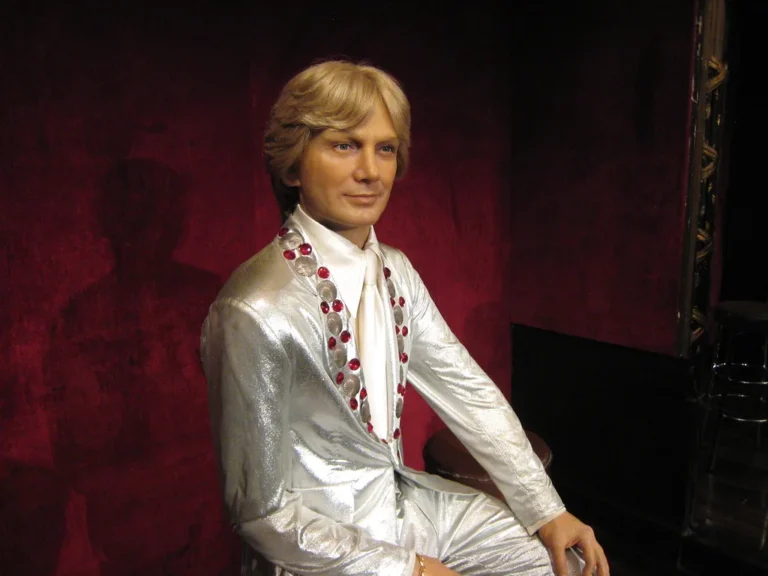

Claude François, born on 1 February 1939, left his mark on French music history through a meteoric career and an enduring legacy. Both a talented artist and a visionary entrepreneur, he transformed the music industry of the 1960s and 1970s. With hits such as “Belles, belles, belles” and “My Way”, he captivated millions of listeners.
His record label played a key role in launching the careers of artists such as Patrick Juvet and Alain Chamfort. Claude François topped the charts and reshaped the way music was produced and marketed. His influence extended beyond France, with songs adapted by international stars such as Frank Sinatra and Elvis Presley.
His death on 11 March 1978, at just 39, shocked the world. Yet his musical legacy lives on. In this article, we explore his career, his innovations and his lasting impact on French music. Discover how he changed the industry and why his work remains alive today.
Biography and early career
Born into a modest family, he grew up surrounded by cultural diversity. Although his childhood brought material hardships, it was rich in experiences that shaped his character.
The icon’s origins and childhood
Born in Egypt, he spent his childhood in Ismailia, in a villa near the Suez Canal. His father, a bank employee, instilled in him a strong work ethic. War, however, upended everything, and the family faced growing financial difficulties.
These contrasting experiences, from a comfortable childhood to economic hardship, profoundly influenced his outlook. They fed his fierce determination and passion for music.
His first steps in music
His earliest musical experiences came with an orchestra in Monte Carlo. There he discovered his calling as a singer. His move from banking to the stage was driven by an intense passion for his art.
Qualities such as perfectionism and diligence helped shape his identity as a singer. Together with his natural charisma, they made him a rising figure in French popular song.
He quickly became known for his distinctive style and energy on stage. His career has inspired generations of musicians and fans.
To learn about other icons of French music, you can read the biography of Catherine Ribeiro.
His rise in the yé-yé scene
The 1960s marked the peak of Claude François’s career. His catchy melodies and electrifying performances made him one of the central figures of French music and an embodiment of the yé-yé spirit.
The 1960s phenomenon and his success on stage
His musical debut coincided with the emergence of yé-yé, a movement that captivated young people. His first records, including “Belles, belles, belles”, were immediate successes, carried by an energy and charisma that won over audiences.
His performances at the Olympia, one of France’s best-known music venues, remain memorable. Combining dance and song, his stage presence changed expectations for live music and made him a phenomenon on the French scene.
The impact of the media and touring
Media support, particularly from Salut les copains, played a key role in his rise. The magazine, a symbol of yé-yé culture, spread his image and songs, strengthening his status as a youth idol.
His tours in France and abroad cemented his success. Each concert gave him another chance to connect with audiences and extend his influence on the music scene.
| Year | Song title | Impact |
|---|---|---|
| 1962 | Belles, belles, belles | A striking debut that launched his career |
| 1965 | Alors je chante | Success on stage |
| 1967 | Comme d’habitude | International hit |
Claude François’s sudden death in 1978, at just 39, shocked the world. His musical legacy remains vibrant, inspiring generations of artists and fans.

To learn more about the media’s influence on 1960s music, you can read this detailed study.
Claude François and his record label: how did he shape the industry?
Claude François’s career reflects a bold entrepreneurial vision. By creating his own label, Flèche, he freed himself from the constraints of major record companies and gained greater control over his work.
Creating the Flèche label and gaining artistic independence
The launch of Flèche marked a turning point in his career. His independence allowed him to produce more personal songs without pressure from major record companies. This artistic freedom strengthened his musical identity and inspired a generation of artists.
Signature hits and international success
Hits such as “Comme d’habitude” crossed borders. Adapted by international stars, these songs brought his music to a worldwide audience. That global success cemented his status as an icon and attracted fans around the world.
The enthusiasm and loyalty of fans across generations show the lasting impact of his work. His music continues to resonate, a testament to his enduring influence.
The architectural heritage of his home
Le Moulin de Dannemois, in the Île-de-France region, is a landmark that served as both a peaceful retreat and a creative space. Steeped in history, the mill offered refuge and inspiration to artists, including Claude François.
Le Moulin de Dannemois: a peaceful retreat and creative space
Built in the early twentieth century, Le Moulin de Dannemois stands out for its distinctive architecture. Its idyllic setting amid greenery encourages reflection and creativity. With its stone walls and traditional features, the residence reflects a carefully preserved architectural heritage.
How the residence changed and was renovated
Over the years, Le Moulin de Dannemois underwent several renovations intended to preserve its historic charm. The work modernized its spaces while respecting the character of the original structure. Today, the site is both a retreat for creators and a reminder of local history.
| Feature | Description | Significance |
|---|---|---|
| Watermill | Built in 1901 | Symbol of local industrial history |
| Garden | Designed by a landscape gardener | A source of inspiration for artists |
| Workroom | Equipped with old tools | A space for creation and reflection |
At Le Moulin de Dannemois, past and present meet, offering visitors a distinctive experience. Its architectural heritage continues to inspire future generations.

Personal innovations and bold projects
Some figures remain influential because of their groundbreaking ideas. Claude François was one of them: he brought advanced technology into his daily life and challenged the conventions of his era.
The heart-shaped swimming pool and innovative technology
One of his most distinctive projects was a heart-shaped swimming pool conceived as a tribute to Elvis Presley. Both original and symbolic, it reflected his forward-looking outlook. Underwater speakers created an unusual experience in which music became part of the aquatic setting.
- The heart-shaped pool, a symbol of love and passion, captivated the public during his tours.
- His early adoption of innovative technology strengthened his image as an artist ahead of his time.
- The underwater speakers created an immersive experience that left a lasting impression.
These bold initiatives surprised the public and influenced contemporary trends. They show his determination to push boundaries and explore new creative possibilities.
These projects reveal someone constantly seeking innovation and eager to amaze and inspire. His daring and creativity helped renew the arts scene and left a lasting mark on cultural history.
To learn more about his final projects and recent developments, you can consult this source.
The musical and cultural impact of his work
Claude François’s music crossed borders and left an enduring mark on music history. His distinctive talent captivated French audiences and reached listeners around the world.
The international reach of “Comme d’habitude”
“Comme d’habitude,” one of his signature hits, travelled around the world. Adapted into English as “My Way” by Frank Sinatra, the song became a timeless classic. That adaptation expanded his influence and brought him international recognition.
- “Comme d’habitude” made its mark on international music history, demonstrating the broad appeal of the composition.
- His albums, particularly those produced by his record label, held an important place in the music of his era.
- The public image he cultivated, combining charisma and authenticity, contributed to his lasting influence.
His record label played a key role in securing his artistic legacy and helping his work endure across decades. Accounts from fans and fellow artists highlight the originality of his creations.
Influence on the media and his public image
Claude François’s media strategy was central to the creation of his public image. By mastering the communication channels of his era, he established himself as an enduring icon.
Media strategy and the making of the Cloclo myth
His television appearances and media campaigns were carefully planned to strengthen his iconic status. Each hit was accompanied by striking staging that reinforced his image as a charismatic performer.
March brought several turning points in his career. In March 1967, for example, the release of “Comme d’habitude” coincided with a national tour, extending his influence on the music scene.
These strategies captivated audiences and changed the conventions of communication in the music industry. His media legacy continues to inspire artists today.

His record label’s role in changing the industry
Creating his own record label marked a decisive turning point in French music history. By launching Flèche, he freed himself from the constraints of major record companies and opened the way to a new era of artistic freedom.
Partnerships and the discovery of notable artists
The label helped launch the careers of artists such as Patrick Juvet and Alain Chamfort. These collaborations enriched the music scene and reshaped production practices.
| Year | Title | Impact |
|---|---|---|
| 1967 | Comme d’habitude | International success |
| 1970 | Le Lundi au soleil | Artistic recognition |
| 1974 | Le Téléphone pleure | Signature hit |
These innovations changed the industry and inspired later generations. Learn more about his legacy.
Conclusion
Time has not diminished Claude François’s influence. His talent and varied work still resonate across the music landscape. His legacy, shaped by innovation and boundless passion, remains a source of inspiration for contemporary artists.
After his death, his work endured for decades, while his home became a place of pilgrimage for fans. His posthumous influence attests to the lasting impact of his creations, which continue to captivate listeners around the world.
His work combined music, innovation and daring, reshaping industry practices. Time has confirmed the strength of his talent, which still inspires new generations. To explore the musical world around him, you can read about the history of rock and its influence on music culture.
FAQ
What was Claude François’s international influence?
Who were his fans?
How did his legacy endure after his death?
What are his best-known songs?
Why was Le Moulin de Dannemois important to him?
What projects did he pursue outside music?
How did he influence French culture?
Source links
- https://www.allmusic.com/artist/claude-fran%C3%A7ois-mn0000141336
- https://journals.sagepub.com/doi/10.1177/0957155815587237
- https://musicbrainz.org/artist/9b4b12e4-8eb5-455f-84ea-243b28e2c458
- https://www.cshf.ca/songwriter/claude-dubois/
- https://en.wikipedia.org/wiki/Tino_Rossi
- https://daily.redbullmusicacademy.com/2014/02/ye-ye-introduction/
- https://www.tandfonline.com/doi/full/10.1080/09639489.2017.1308340
- https://www.peterlang.com/document/1043842
- https://archium.ateneo.edu/kk/vol1/iss32/11/
- https://dictionary.cambridge.org/dictionary/english/record-label?topic=enterprises
- https://whc.unesco.org/en/about/
- https://www.icomos.org/
- https://www.architectural-review.com/
- https://www.openedition.org/?lang=en
- https://www.gov.uk/government/publications/music-and-streaming-market-study-final-report/executive-summary
- https://www.jstor.org/
- https://www.britannica.com/biography/Claude-Francois
- https://www.smithsonianmag.com/arts-culture/saddle-up-badger-clark-americas-cowboy-poet-180975770/
- https://www.ifpi.org/
- https://www.cambridge.org/core/journals/popular-music
- https://www.wipo.int/en/web/copyright
- https://hal.science/?lang=en
- https://www.oecd.org/en/topics/culture-and-local-development.html
- https://www.routledge.com/
- https://arxiv.org/
- https://www.lexology.com/