
Janet Woollacott was 72 when she died. Born on 4 November 1939 in Carlton, Nottinghamshire, she died on 11 November 2011 in Clamart, Hauts-de-Seine.
A British performer who moved from dance to singing, she made her mark on the French entertainment scene. Her life intersected with those of figures such as Claude François and Gilbert Bécaud, but she also pursued her own career.
The rest of this article offers a clear timeline, followed by biographical sections on her origins, dancing career, relationships and discography.
Key places: Carlton in the United Kingdom, the French Riviera, Paris (the Olympia) and finally Clamart, where she is buried. The article draws on verifiable facts to answer a purely informational question.
Janet Woollacott: How Old Was She When She Died? A Timeline
Let us trace, date by date, the milestones confirming that she was 72 when she died. The timeline places personal events alongside artistic milestones to avoid confusion.
4 November 1939: Birth in Carlton, United Kingdom
She was born on 4 November 1939 in Carlton, the date needed to calculate her age.
1959: Meeting at the Sporting Monte-Carlo
In 1959, her meeting with Claude François at the Sporting Monte-Carlo marked a personal and professional turning point.
5 November 1960: Marriage in Monaco
The wedding, held on 5 November 1960 in Monaco, formalized a relationship that would later lead the couple to move to Paris.
1962: Engagement at the Olympia
In 1962, her engagement as a dancer at the Olympia brought her into musical circles. That year also marked the beginning of tensions in her marriage.
13 March 1967: Divorce
The relationship officially ended when their divorce was granted on 13 March 1967, a distinct event from their separation.
1968: Birth of her daughter
Her daughter, Jennifer Bécaud, was born in 1968, a major event in her personal life. Jennifer was her only child.
1970s–1980s: Transition to singing
During the 1970s and 1980s, she gradually moved from dance to singing, releasing several songs and working with other artists.
11 November 2011: Death in Clamart, Hauts-de-Seine
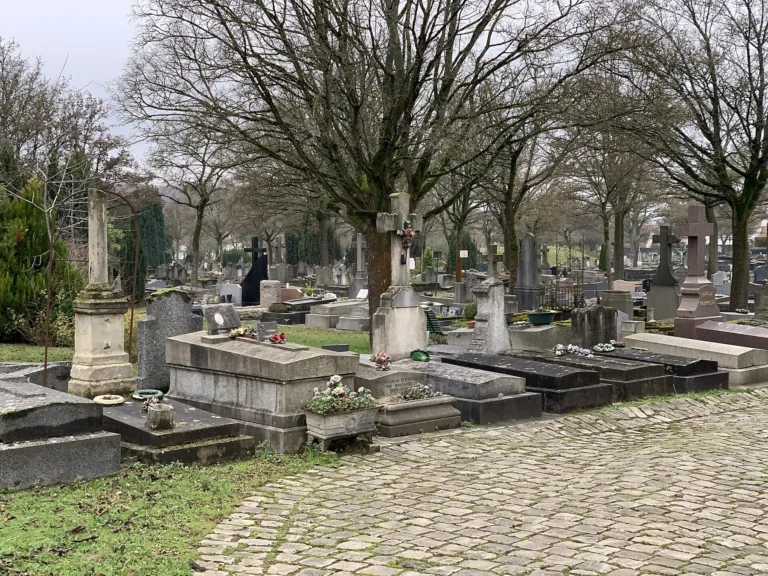
She died on 11 November 2011 in Clamart, Hauts-de-Seine. Born in November 1939, she was therefore 72 when she died. She is buried in Clamart Cemetery.
| Date | Event | Place | Approximate age |
|---|---|---|---|
| 4 Nov. 1939 | Birth | Carlton (UK) | 0 |
| 1959 | Meeting with Claude François | Sporting Monte-Carlo | ≈ 20 |
| 5 Nov. 1960 | Marriage in Monaco | Monaco | 21 |
| 13 March 1967 | Divorce | France | 27 |
| 11 Nov. 2011 | Death and burial | Clamart (Hauts-de-Seine) | 72 |
To learn more about her musical collaborations and fellow artists, see the tribute to Dominique Perrier, which describes some of their professional connections.
Birth, Origins and First Steps: From Carlton to the French Riviera
Born in Nottinghamshire, she spent her youth in Britain before setting out on a path toward the French stage.
Family background: the daughter of Leonard Arthur Woollacott and Clarice Edith Burton, she grew up in Carlton. Her English roots partly explain her outlook and disciplined approach to work, qualities that would later serve her on stage.
A British upbringing before France: Family and youth
These family details add to her biographical profile and help trace her life. They are useful for documentary research.
Dancing in clubs: The Monte-Carlo years
She began dancing at an early age in clubs on the French Riviera, where orchestras and cabarets gave her valuable exposure.
Monte-Carlo played a decisive role through its prestigious venues, international audiences and professional contacts. It was there that her charm and stage presence opened doors for her.
“Her stage presence appealed to audiences and producers, making it easier for her to secure major contracts.”
| Aspect | Detail | Impact |
|---|---|---|
| Origins | Carlton (Nottinghamshire) | Cultural roots and early training |
| Parents | Leonard Arthur Woollacott, Clarice Edith Burton | Reliable biographical reference points |
| Early career | French Riviera clubs, Sporting Monte-Carlo | International exposure and professional connections |
For more on her life, consult this biographical profile.
Professional Dancer: Stages, the Olympia and Artistic Circles
The Olympia stage soon became a turning point in her artistic career.
In 1962, she joined Arthur Plasschaert’s ballet company. The engagement gave her immediate exposure and demanded a high level of technical skill as a dancer from abroad working in French entertainment.
The Olympia was a springboard: there she encountered headline performers, cameras and producers. Rehearsals and dressing rooms brought artists together.
The Olympia as a springboard: Ballets and fellow performers
Gilbert Bécaud, already an established singer, appeared on the same bill. The two grew closer, and some signs suggested that he was “under her spell” backstage.
A presence in French entertainment in the 1960s
At the same time, Claude François continued his rise. Their paths crossed amid rivalries, rumors and collaborations.
Her career continued on tour, on television and in cabarets. These experiences quickly turned a brief appearance into a lasting connection with the entertainment world.
To learn more about her life and artistic connections, read this portrait and tribute.
Claude François: The Singer’s Only Wife and a Strained Relationship
Her marriage to Claude François opened a public and difficult chapter of her personal life.
A November 1960 wedding and a move to Paris
The couple married on 5 November 1960 at Monaco’s town hall, with Rolland Chakour and Renaud Schulze as witnesses. Soon afterward, on the advice of Sacha Distel and Brigitte Bardot, they left for Paris and settled in Montmartre in 1961.
Jealousy, separation and divorce: From 1962 to March 1967
Tensions in their marriage grew quickly. People who knew them often spoke of her husband’s possessiveness and jealousy.
They separated after she met Bécaud. The legal proceedings continued, and their divorce was finally granted on 13 March 1967, a date often cited as the legal end of this chapter.
Echoes in song: “Je sais” and the couple’s story
The song “Je sais” (1964) is often described as an artistic echo of their breakup. It has become part of the couple’s biographical story.
A moment of reconciliation followed in September 1964, during an evening in an Olympia dressing room with France Gall present. The book Claude François, les années oubliées (1998) recounts these events and examines those years at length.
| Date | Event | Note |
|---|---|---|
| 5 Nov. 1960 | Marriage in Monaco | Witnesses: Rolland Chakour, Renaud Schulze |
| 1961 | Move to Paris | Montmartre; advice from Distel and Bardot |
| 1964 | “Je sais” | Song associated with the breakup; Olympia in Sept. 1964 |
| 13 March 1967 | Divorce | Legal end of the marriage |
Gilbert Bécaud: Their Relationship, Private Life and Jennifer’s Birth
At the Olympia, a budding romance quickly attracted public attention. Her meeting with Gilbert Bécaud in 1962 became an emotional turning point and drew media attention to the dancer turned singer.
Meeting and falling in love at the Olympia
Their relationship developed backstage and on stage. They became a closely watched couple, with their careers and private lives intertwined in the spotlight.
1968: Birth of their daughter
Their daughter was born in 1968 and later became known by the stage name Jennifer Kay. Her birth reflects the importance of their relationship, which lasted about four years.
After Bécaud: Other marriages
She later married Jean-Paul Barkoff, then Jean Sarrus and finally Dominique Perrier. These marriages also influenced some of her artistic collaborations.
“Being known as the partner of two major singers often complicates the public’s view of an artist’s own career.”
| Year | Event | Consequence |
|---|---|---|
| 1962 | Meeting Gilbert Bécaud at the Olympia | Beginning of a widely publicized relationship |
| 1968 | Birth of their daughter (Jennifer Kay) | Only child; stage name: Jennifer Kay |
| Later years | Marriages: Jean-Paul Barkoff, Jean Sarrus, Dominique Perrier | Later musical projects and collaborations |
For more information, consult this profile.
Singing Career: Songs, Collaborations and Musical Projects
Her move into singing reveals another side of her artistic determination. The stage skills she acquired as a dancer helped her make the transition. Her connections and her desire to be recognized beyond her romantic relationships also played a part.
Her best-known songs
In 1972, she released “Bénie soit la pluie” and “Le chocolat”. These songs belong to the popular music of the 1970s and were aimed at a broad audience.
First a duo, then a solo artist
In 1970, she recorded duets with Jean Sarrus: “Je t’aime… normal” and “Super-gangsters” (with lyrics by Gérard Rinaldi). This preceded her solo career two years later.
Dominique Perrier and their projects
Dominique Perrier became a major creative partner. He composed and produced music, opening doors for her in cinema and electronic music.
Discography milestones
| Year | Title / Project | Note |
|---|---|---|
| 1970 | Duet with Jean Sarrus | “Je t’aime… normal”, “Super-gangsters” |
| 1972 | “Bénie soit la pluie” / “Le chocolat” | Solo pop singles |
| 1985 | “Mama” / “The dream” (Adieu blaireau) | English-language songs for cinema |
| 1980–2011 | Contributions to Space Art & Stone Age | Songwriting and vocal credits, and long-running collaborations |
“The length and variety of her projects show a musical career pursued with consistency and care.”
Conclusion
She died on 11 November 2011 in Clamart, aged 72, closing the period from 1939 to 2011.
Her life unfolded in three stages. First, her British roots and early work as a dancer shaped her stage presence. Next, her public relationship with Claude François became a notable part of her biography without defining her entire life. Finally, she later built her artistic career and personal life around singing and lasting collaborations.
Public memories of her combine songs, stories and reactions years after her death. Her life thus appears as a series of successful transitions between dance, love and musical projects. This chronological account helps explain her journey and artistic legacy.