
Purpose: to bring together, without speculation, verifiable information about the death of this figure known in France. The article clearly distinguishes confirmed facts from unanswered questions.
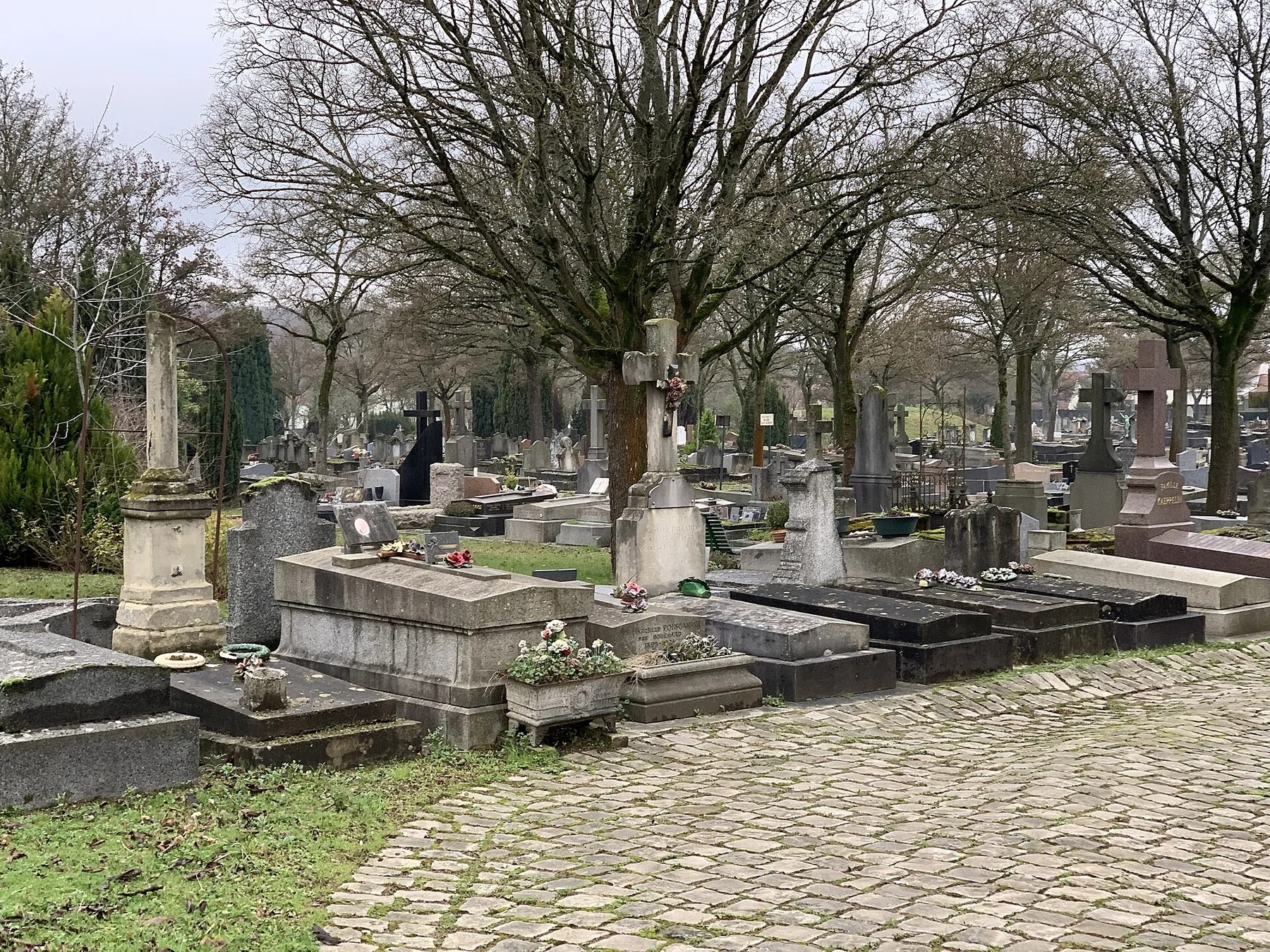
According to press reports, her death was announced in November 2011, following an illness that was not specified. The funeral was held privately. She was buried in Clamart cemetery.
We will first set out what the sources confirm: the date, the funeral and the mention of an illness. We will then identify what has not been documented: the medical details and a precise account of her final moments.
Why does this subject still attract interest? Curiosity centres on Claude François’s former partner, the scarcity of public information and renewed attention around anniversaries connected with the singer’s death.
In brief: the date of death, reported age and funeral in Clamart, followed by biographical background (dance, singing and significant relationships). Finally, we will explain what circumstances means here: publicly disclosed information, rather than theories about her private life.
What sources confirm about Janet Woollacott’s death in November 2011
Press archives place her death on 11 November 2011. Obituaries and celebrity death columns reported the news in the French press at the time.
Most articles give her age as 72. One source says 73, without explaining the difference; this was probably an editorial calculation or an approximation.
The statement says she was “taken by illness” or “died following an illness.” These phrases provide no details about the diagnosis, the duration of the illness or any treatment.
The funeral took place “in the strictest privacy” on the morning of Wednesday, 16 November 2011. She was buried in Clamart cemetery (Hauts-de-Seine).
Her name remains closely associated with Claude François, prompting renewed searches during commemorations, although no new information about her own death has emerged.
What follows
The next section will explain what information about her final moments is publicly documented and why the account remains limited.
Janet Woollacott: Her final days and circumstances, what we know
Available information gives few details about the period before her death. The notices are limited to the date, the phrase “following an illness” and the mention of a private ceremony.
Available information about her final days
There is neither a published timeline nor a detailed medical statement. The sources cited in articles confirm only November 2011 and her burial in Clamart.
This limited documentation means that no witness has spoken publicly about her final day or the treatments she received. We therefore cannot reliably reconstruct every moment of what happened.
Why the public account remains limited: family privacy and a lack of medical details
Her family and those close to her evidently chose discretion. In the lives of people connected with entertainment, the end of life is sometimes shielded to protect privacy.
In addition, many online articles display technical notices about cookies or breaks for advertising that provide no biographical information. These elements can create the impression that essential information about her final moments is missing.
When reading these accounts, distinguish facts (the date and place of burial) from comments and rumours. Without a medical source or verified testimony, any further detail would be speculation.
We will next revisit her life and career to explain why she remains a subject of articles and biographies.
Who was Janet Woollacott? A British dancer who became a figure in French entertainment
Born on 4 November 1939 in Carlton, Nottinghamshire, Janet Woollacott gradually established herself in the French entertainment world.
Birth in Nottinghamshire in 1939 and artistic beginnings
Janet Edith Woollacott began performing on small stages. She worked in clubs on the French Riviera, learned her craft and gained confidence.
The French Riviera and the Sporting Monte-Carlo: her rise as a dancer
Spotted at the Sporting Monte-Carlo, she performed in revues where Arthur Plaschaert’s ballets attracted attention. Appearing on these stages helped her build a strong professional network.
Her reputation grew through dance, artistic encounters and, later, musical ventures. The public often remembers her relationships, but her artistic life also deserves recognition.
| Item | Detail | Context |
|---|---|---|
| Name | Janet Edith Woollacott | Born in 1939 in Carlton (Nottinghamshire) |
| Role | Dancer | French Riviera clubs and revues |
| Notable venue | Sporting Monte-Carlo | Late 1950s and early 1960s |
Her relationship with Claude François: marriage in Monaco, separation and the song “Je sais”
Their paths crossed in 1959, before the singer’s rapid rise to fame. They married on 5 November 1960 in Monaco, marking the beginning of a relationship often mentioned in biographies.
In 1961, the young couple moved to Paris to try their luck. She came from the world of stage performance, while he was beginning his career as a singer; their ambitions sometimes collided with the realities of the industry.
Tensions and jealousy were mentioned in the press at the time. The pressures of their careers strained the relationship, although no single account can be treated as definitive.
Their divorce was finalised in March 1967 (on 13 March, according to some sources). It formalised a separation whose course remains difficult to reconstruct in detail.
The song “Je sais” (1964) is often associated with their story. Several articles present it as a cultural reminder of the period of their separation, without treating it as conclusive evidence.
Why does the subject keep returning? The singer’s private life comes back into focus during anniversaries and features devoted to him. To learn more about his grave and his place in public memory, see the dedicated page: Claude François’s grave.
Her relationship with Gilbert Bécaud and the birth of Jennifer Bécaud
The Olympia in 1962 was more than a stage: it marked the beginning of a relationship with Gilbert Bécaud that attracted media attention.
At the Olympia in 1962: from collaboration to a relationship
Hired as a dancer for his 1962 concert run, she worked closely with Gilbert Bécaud. The press reported an affair and described a love that went beyond their professional relationship.
Jennifer Bécaud, born in 1968: family ties at the heart of the accounts
Jennifer Bécaud was born in 1968. Her appearance in articles connects two major names in entertainment and explains why her place as their daughter often features in these accounts.
After the media attention: calmer relations and reported public moments
Accounts mention a public moment at the Olympia in September 1964, when Bécaud and Woollacott congratulated Claude François in his dressing room. This scene adds nuance to the story and shows an amicable exchange.
To avoid confusion, Claude François had two sons, Claude Jr. and Marc. Biographies tend to repeat a few notable episodes several times, rather than provide a continuous, documented account of his private life.
A career beyond her relationships: songs, collaborations and the 1970s–1980s
In the 1970s and 1980s, she maintained a low profile but remained active in music. Her career continued through recordings and stage performances that received less media coverage.
Titles mentioned include “Bénie soit la pluie” and “Le chocolat”. These references show that she was active in the popular music of the period.
Several sources mention her collaboration with Dominique Perrier. He is described as an artistic partner and, in some accounts, a life partner.
Years after working with famous performers, her path illustrates her wish to retain a musical identity of her own. Her career continued, even though her widely reported love affairs sometimes overshadowed her work.
In conclusion, the 1970s and 1980s show that she pursued an independent professional life. The next section will address her private life, marriages and public image.
Private life, marriages and public image: what we know without speculation
The marriages mentioned in articles help trace a few stages of her personal life.
During her life, the press mentioned several unions. These included marriages to Jean-Paul Barkoff and Jean Sarrus (of Les Charlots).
Dominique Perrier is also mentioned as an artistic partner and, according to some notices, a companion.
Editorial principle: stick to verified reports
Without precise dates or detailed public sources, it is best not to speculate about the reasons for or chronology of these relationships.
Articles report the names; they do not always provide verifiable personal details.
A public image shaped by a shorthand description of her relationships
Later, the media frequently used the shorthand “Claude François’s ex-wife.” This description affects how her name is remembered.
Whenever a feature focuses on the singer, she reappears as a biographical reference point. This can diminish recognition of her own career.
| Item | Reported information | Context |
|---|---|---|
| Marriages mentioned | Jean-Paul Barkoff, Jean Sarrus, Dominique Perrier | Relationships reported in biographical notices |
| Public image | Often described as Claude François’s ex-wife | Common media shorthand |
| Editorial rule | No speculation | Adherence to verified reports |
In summary, several relationships are mentioned over the course of her life, although their details are not always known. The conclusion below recaps the confirmed facts about the end of her life (November 2011, an unspecified illness and burial in Clamart) and the main points of her artistic career.
Conclusion
In summary, the sources establish the following: she died in November 2011, an illness was mentioned without further detail, her funeral was private and she was buried in Clamart cemetery. Some notices differ slightly on her age.
Her career is known: a British dancer who became a figure in French entertainment, then a singer active in the 1970s and 1980s, with several public collaborations.
She was married to Claude François; that relationship largely explains the renewed interest when features revisit the death of Claude François or Claude’s death.
The publication Claude François, les années oubliées is part of how that period is remembered. Keep to the verified facts. Family discretion and the lack of public medical information leave some questions unanswered.