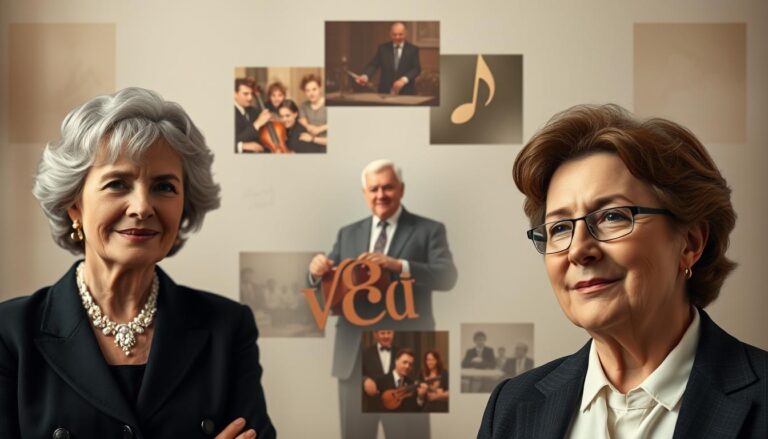

Why this story still fascinates: the scarcity of photographs and the fact that Janet Woollacott was his only wife partly explain the interest. Their wedding in Monaco on November 5, 1960, remains a matter of public record.
Our approach is to examine the available photographs—of the wedding, public appearances and archival material—to glimpse their life as a couple behind the star image. The images raise questions about the boundary between public and private life.
A brief timeline: they met in the late 1950s, married in 1960, separated in the early 1960s and divorced in 1967. These dates mark the key stages of their story.
Janet Woollacott holds a singular place as the only woman he officially married. Her career, her later relationship with Gilbert Bécaud and the controversy surrounding Jennifer continue to attract media interest.
Finally, we distinguish established facts—the dates, the marriage and the 2022 documentary—from accounts based on testimony. To learn more about his life, see the official biography on Claude François and a feature on the archives and songs on his website.
Claude François with Janet Woollacott: images and defining moments from a brief romance
The stage of the Sporting Monte-Carlo was the setting for an encounter that would soon become public and decisive.
Meeting at the Sporting Monte-Carlo and falling in love at first sight
In the Sporting’s fashionable surroundings, the close-knit entertainment world created an atmosphere where people could meet. Accounts from the late 1950s describe an immediate attraction.
The wedding in Monaco in November 1960: Cloclo’s “only wife”
They decided to marry a few months after meeting. Their wedding, celebrated in Monaco on November 5, 1960, became a symbolic moment.
With a background in ballet, she trained as a British dancer and later worked in Paris. That background explains her presence in these circles and how quickly she became part of them.
The rare period photographs and what they say about the couple
Few photographs are available. The poses and smiles chiefly reflect a publicity image: glamour, visibility and stardom.
These photographs are sought out today for the nostalgia they evoke, the curiosity surrounding the singer’s love life and his enduring aura. They tell us more about a media event than they reveal about the couple’s private life.
- A meeting in fashionable society at the Sporting Monte-Carlo.
- A swift wedding in Monaco on November 5, 1960.
- Rare photographs shaped by publicity and myth.
By contrast, this brief romance, highly publicized at first, led to a more private and troubling turning point, which we will consider next.
Behind the scenes of a strained relationship: jealousy, control and testimony
What began as a romance became a strained relationship behind the scenes. Accounts describe a marked change after the honeymoon.
The change after the honeymoon: possessiveness and prohibitions
According to people close to the couple, the singer, initially seen as charming, became protective to the point of imposing strict rules.
Accounts describe restrictions on going out, scrutiny of her laughter and limits on social contact. This change weakened the relationship and isolated Janet.
“He watched her backstage”: the documentary’s account
In the documentary broadcast on France 3 in September 2022, Christine Reynolds describes the surveillance during performances.
“He was very, very, very jealous; he stayed backstage to watch her.”
Anger, confinement and escape: the breakup by telephone
Accounts describe angry outbursts in private and a feeling of being trapped. Janet fled to London, then ended the relationship by telephone.
- Surveillance: his presence backstage during performances.
- Restrictions: limits on outings and social interactions.
- Breakup: her flight abroad and their separation at a distance.
| Aspect | Source | Impact |
|---|---|---|
| Backstage surveillance | Documentary broadcast on France 3 in September 2022 | Isolation and tension |
| Social restrictions | Testimony from someone close to the couple | Deterioration of the relationship |
| Breakup by telephone | Account of her flight to London | End of a personal chapter |
After Claude François: Gilbert Bécaud, Jennifer and the controversy over parentage
A move to the Olympia changed the course of several lives and fueled controversy.
A dancer at the Olympia meets another singer
After arriving in Paris, Janet Woollacott was hired as a dancer in the ballet company accompanying Gilbert Bécaud.
Working closely together on stage encouraged a relationship that went beyond their professional roles. Backstage life brought performers, musicians and technicians together.
Jennifer’s birth: a “secret daughter” and belated acknowledgment
Jennifer was born from this relationship. The media initially described the child as a secret daughter, an expression that fueled public curiosity.
Her father acknowledged her later, when she was 25, a detail often emphasized in accounts of the story.
The administrative controversy and the name “Jennifer François”
After the separation in 1965, an administrative gray area emerged. According to one account, Claude François went to the town hall to register Jennifer, who for a time bore the name “Jennifer François.”
“He took advantage of that ambiguity…”
Breakups, songs and legacy
The song Je sais, recorded in late 1964, is often associated with this period of emotional tension.
The divorce was finalized in 1967. Beyond the conflicts, media coverage of these episodes left a lasting mark on archives and collective memory.
| Event | Date | Consequence |
|---|---|---|
| Engagement at the Olympia | Early 1960s | Professional encounter with another singer |
| Jennifer’s birth | 1960s | Described as a “secret daughter”; acknowledged at 25 |
| Registration at the town hall and the name she bore | After 1965 | Controversy over parentage and temporary use of the name “Jennifer François” |
For an overview of the defining moments and their media impact, archives remain a valuable source.
Conclusion
What happened next shows how fame and private life intersected.
Timeline: they met in the late 1950s, married in Monaco in 1960, saw their relationship gradually deteriorate, separated and then divorced in 1967. This timeline helps establish when the marriage legally ended.
The photographs remain evocative but limited: they suggest a public image without revealing the couple’s private life. The singer had other relationships, with France Gall often mentioned, and later started a family with Isabelle Forêt.
Jennifer’s acknowledgment at 25 illustrates how accounts can change over time. Janet Woollacott died in 2011 at the age of 72, quietly closing this chapter in the artists’ lives.