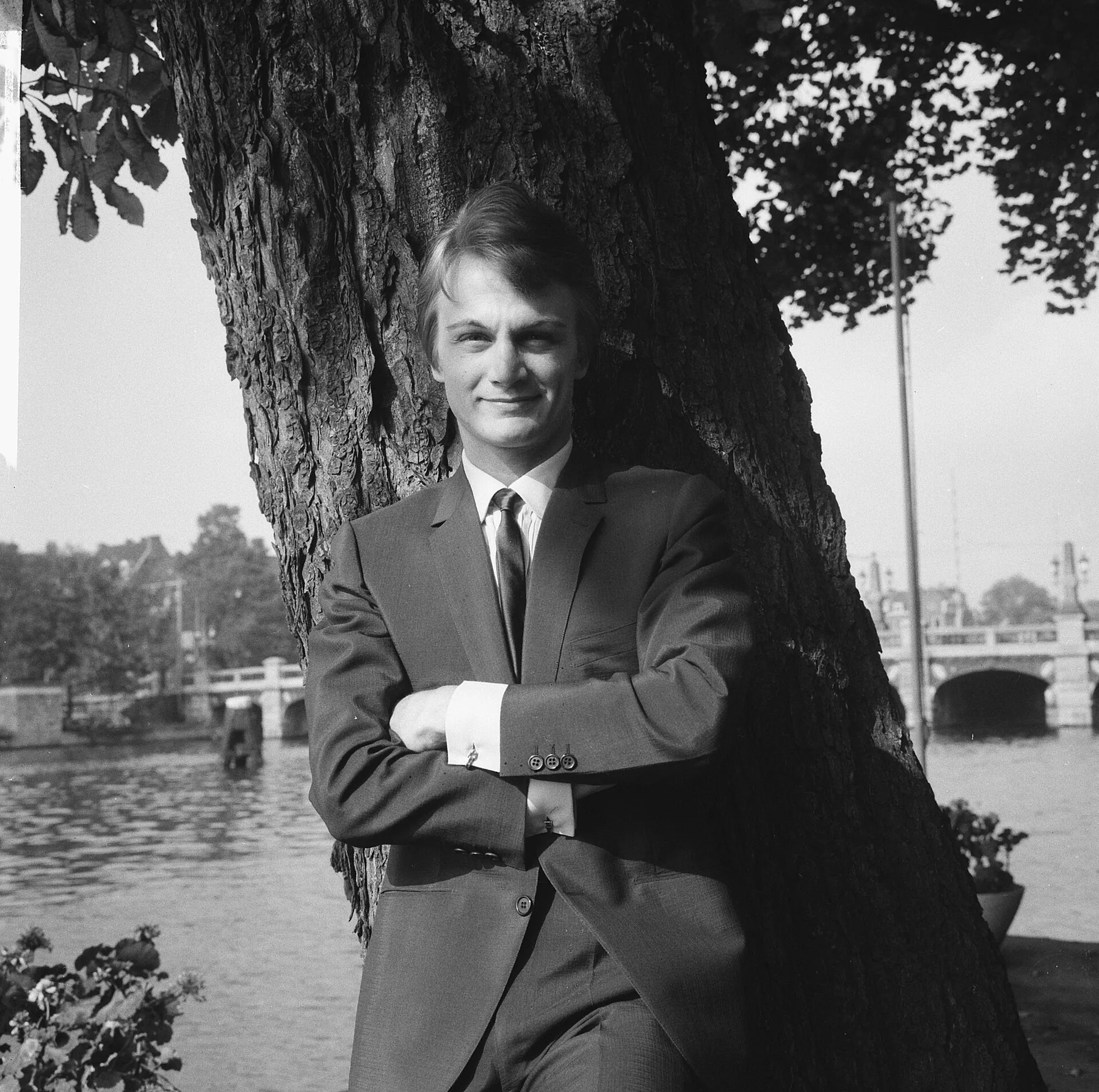

You probably know Claude François, the icon of French popular song, but did you know he had a distinctive full name? Claude Antoine Marie François, better known by the nickname Cloclo, made his mark on French music history.
Although his stage name became legendary, his real name is less familiar to the public. Yet it is closely tied to a meteoric career that transformed popular music in France. Discover how that name helped shape his artistic identity.
Through international hits such as Belles Belles Belles and Comme d’habitude, Claude François left an indelible mark. His story, shaped by extreme perfectionism and boundless passion, continues to captivate fans.
Introducing Claude François
Claude François, known by the stage name Cloclo, is an icon of French popular song. His name is synonymous with success and unforgettable melodies that marked several generations. A talented singer, he captivated audiences in France and abroad with his energetic performances and distinctive voice.
His life was a succession of challenges and triumphs. Born into a family with a complex background, Claude François found his path in music early on. His career, marked by hits such as Belles Belles Belles and Comme d’habitude, redefined the standards of popular song in France.
His impact on the music scene of the 1960s and 1970s was immense. As a singer, he topped the charts and influenced a generation of artists. His personal story, shaped by a family of varied origins, added a unique dimension to his artistic journey.
Claude François’s origins and family
Claude François, the icon of French popular song, was born in Ismailia, Egypt, into a rich and varied family setting. The city, on the Suez Canal, was a strategic and cultural crossroads that profoundly influenced his childhood.
Birth and family background
Claude’s father, Aimé François, was a French engineer whose career shaped his son’s life. His mother, Lucia Mazzei, was of Italian origin and brought a distinctive cultural dimension to the family. Together, they created a home in which music played a central role.
As a child, Claude grew up among several cultures, which nurtured his passion for music and performance. The historical situation in Egypt at the time also played a key role in his artistic development.
The legacy of his ancestors and parents
Claude François’s family heritage is rich and varied. His father, Aimé, from a French family, passed on the rigor and discipline that guided his career. His mother, Lucia, with her Italian roots, instilled in him a passion for music and art.
| Parent | Origin | Role | Legacy |
|---|---|---|---|
| Aimé François | France | Engineer | Rigor and discipline |
| Lucia Mazzei | Italy | Mother | Passion for music |
This blend of influences shaped the personality and talent of Claude François, the gifted child who became a legend of French popular song. His family story remains a source of inspiration, showing how an artist can draw strength from his roots.
Learn more about his remarkable journey.
A childhood marked by exile and upheaval
Claude François’s life was profoundly shaped by the historical events that shook the world in the twentieth century. Despite a measure of material comfort, his childhood was disrupted by the Second World War and the exile that followed.
Life in Egypt and the impact of the Second World War
Before the war years, Claude François had a relatively sheltered childhood in Ismailia, Egypt. However, the outbreak of the Second World War in 1939 radically changed the course of his life. Bombing and political instability transformed his family’s surroundings and plunged them into uncertainty.
The historical circumstances of the time had a direct impact on the François family. The war disrupted their daily lives and set the stage for an exile that would leave a lasting mark on Claude François.
Leaving Ismailia and settling in France
In 1956, following the Suez Canal crisis, the François family was forced to leave Egypt. Their hasty departure was a turning point in Claude’s life and marked the beginning of a long exile. Settling in France was a challenge: the family had to adapt to a new way of life.
Their early years in France were difficult. Limited resources and a radical change in cultural surroundings tested the family’s resilience. Yet these hardships also forged Claude François’s determination and strengthened his passion for music.
| Event | Year | Impact |
|---|---|---|
| Second World War | 1939–1945 | Instability and exile |
| Expulsion from Egypt | 1956 | Settlement in France |
| Adaptation to life in France | 1950s | Hardship and resilience |
These upheavals profoundly influenced Claude François’s outlook on life and music. His experience of exile fed his passion for art and gave him a distinctive perspective on challenges and opportunities.
His artistic beginnings and first steps in music
Before becoming an icon of French popular song, Claude François began his musical career in unusual circumstances. The 1960s marked the start of his artistic journey, when he played in various orchestras in Monte Carlo.
His first musical experiences in Monte Carlo
In Monte Carlo, he started out as a percussionist, a role that helped him develop a strong sense of rhythm. These early experiences gradually led him toward singing and revealed his vocal talent.
From percussionist to singer
Claude François’s move from percussionist to singer was marked by unwavering determination. His first recordings, though modest, already hinted at his talent.
| Stage | Year | Details |
|---|---|---|
| First experiences | 1962 | Orchestras in Monte Carlo |
| Move into singing | 1963 | Solo recordings |
| Recognition | 1963 | 2 gold records |
These beginnings laid the foundation for a meteoric career, turning a musician into a legend of French popular song.
His rise to fame in the 1960s
In the 1960s, Claude François captivated French audiences with unprecedented energy and passion. His rise to fame was marked by a string of resounding successes, including the hit “Belles ! Belles ! Belles !”, which put his name on everyone’s lips.
The runaway success of “Belles ! Belles ! Belles !”
Released in 1962, “Belles ! Belles ! Belles !” became a sensation. The song that launched Claude François’s career was played repeatedly on “Salut les copains”, a leading French television program. This helped the artist reach a wider audience and make a name for himself.
The impact of television shows and tours
Television shows played a key role in Claude François’s career. His regular television appearances, combined with triumphant tours in France and abroad, strengthened his image as a charismatic singer. These stage performances broadened his popularity and cemented his status as an icon.
- Regular airplay on “Salut les copains”
- Tours in France and abroad
- The impact of television shows on his public image
These appearances boosted his popularity and created a strong bond with his audience, making Claude François an essential figure in French popular song.
Claude François’s real name: the identity few people know
Behind the public persona of Claude François was a multifaceted man, far removed from the simplified image often remembered today. Although his nickname, Cloclo, became synonymous with success, his real identity remains little known to the wider public.
Archives reveal that the gap between public perception and personal reality marked his life. As the son of a French engineer and an Italian mother, Claude François grew up in a culturally rich environment, far from the narrow image often associated with his musical career.
| Aspect of his identity | Public perception | Personal reality |
|---|---|---|
| Family origins | Rarely discussed | A blend of cultures |
| Personality | Charismatic singer | Introspective man |
| Legacy | Musical legacy | Passing on values |
Later, his career continued to evolve, both on stage and in his private life. His legacy, passed down to his sons and descendants, reflects a desire to preserve his music and the values that guided him.
The media’s influence and the creation of “Cloclo’s” image
The media played a central role in creating and amplifying the image of Claude François, better known by the nickname Cloclo. Through television shows and magazines, the public discovered a charismatic artist whose personality captivated millions.
Television shows such as “Salut les copains” were essential springboards for his career. They allowed Claude François to perform for a large audience and helped forge his image as an energetic, passionate singer. Celebrity magazines, meanwhile, highlighted his private life and reinforced his status as an icon.
Cloclo returned the public’s affection. His ability to connect directly with fans was strengthened by carefully orchestrated media campaigns. Magazines and television shows showcased his artistic and personal qualities, creating a lasting image.
| Medium | Impact on his image | Target audience |
|---|---|---|
| Television shows | Promotion of his musical career | Young audiences |
| Magazines | Exposure of his private life | General public |
| Radio | Airplay for his songs | Adult audiences |
The media contributed to his popularity and firmly established his image in popular culture. Even today, the public’s affection for Cloclo shows the lasting impact of media campaigns on his career and artistic legacy.
Learn more about Claude François’s story and his influence on French popular song.
Stage innovation and the arrival of the Claudettes
Claude François made his mark on the history of French popular song through unforgettable melodies and a revolution in stage performance. The arrival of the Claudettes, a group of dancers who accompanied him on stage, redefined musical entertainment in France.
The idea of dancers on stage
The Claudettes were much more than a simple dance accompaniment. They brought dance, music and theater together. This innovative concept captivated audiences and raised the standard of musical shows.
The arrival of the Claudettes introduced an unprecedented visual and artistic dimension. Every movement was precisely choreographed, creating harmony between music and dance. This heightened the impact of Claude François’s songs and reinvented the look of concerts.
| Development | Impact | Result |
|---|---|---|
| Introduction of the Claudettes | A fresh approach to performance | Greater popularity |
| Coordinated choreography | Improved visual experience | A stronger image for Claude François |
| Influence on concerts | Evolution of musical shows | Higher standards for live performances |
The Claudettes turned Claude François’s concerts into unforgettable events and left a lasting mark on the music industry. Their presence set a new standard for live shows and influenced generations of artists.
Essential hits and a musical career
Claude François left an indelible mark on French music history through his legendary hits. Each of his songs tells a story and captivates entire generations.
His greatest hits and their international adaptations
Among his hits, “Belles ! Belles ! Belles !” (1962) and “Comme d’habitude” (1967) stand out. These songs topped the French charts and were adapted abroad.
“Comme d’habitude” was reinterpreted by Frank Sinatra as “My Way”, becoming a worldwide classic. That version carried the melody across borders, illustrating the broad appeal of Claude François’s music.
International adaptations of his songs show the strength of his creativity. Each version preserves the essence of the original while adapting to local cultures. This helps explain why his songs remain popular today.
The return of his hits in modern versions shows that they endure across eras. Even decades after their release, these melodies continue to resonate with listeners, testifying to Claude François’s lasting legacy.
Tours and international success
Claude François traveled around the world, captivating millions of fans with his electrifying shows. His tours in France and Africa marked his artistic journey and strengthened his status as an international icon.
Concerts in France and Africa
In July 1974, Claude François gave a legendary concert at Porte de Pantin in Paris before 20,000 people. The show, called “Perce-Neige,” remains a key moment in his career. Concerts in France were often scheduled on Mondays, a strategy that helped reach a wider audience.
- July concerts in Paris, Lyon and Marseille.
- Regular Monday scheduling to maximize visibility.
- An enthusiastic audience at every performance.
His tours in Africa were also resounding successes. In 1965, he performed in Morocco and Tunisia, where his shows attracted thousands of spectators. Concerts abroad often differed from those in France, with more elaborate staging.
These tours consolidated his career and strengthened his bond with fans. Each concert was an opportunity to share his passion for music and create a special connection with the audience.
As Michel Polnareff, a contemporary of Claude François, notes, tours were essential to maintaining artists’ popularity and their audiences’ interest.
Business and media ventures
Claude François embodied an entrepreneurial spirit as well as being an artist. Alongside his meteoric musical career, he undertook various projects that marked his journey.
The creation of Flèche Productions and other projects
In 1967, Claude François founded Flèche Productions, a record label that would transform music promotion. It allowed him to take control of his career as both artist and producer. Flèche Productions became a springboard for many talents, strengthening his influence on the French music scene.
His commitment to promoting music
Claude François also bought the magazine Podium, an important vehicle for promoting emerging artists. This project shows his commitment to supporting music and creating opportunities for new talent. His involvement in the publication reinforced his status as a major figure in the music industry.
| Initiative | Year | Impact |
|---|---|---|
| Creation of Flèche Productions | 1967 | Artistic control and promotion of talent |
| Purchase of Podium magazine | 1968 | Support for music promotion |
These initiatives strengthened Claude François’s career and left a lasting mark on the music industry. His dual role as artist and businessman remains a source of inspiration, showing how passion and enterprise can come together to create an exceptional legacy.
Personal life and romantic relationships
The personal life of Claude François, known as Cloclo, was marked by a succession of intense and complicated relationships. His eventful romantic life influenced both his career and his public image.
Marriage, divorce and love in Cloclo’s life
Claude François experienced several defining episodes in his love life. His marriages and divorces were key moments that shaped his personal and professional identity. Each relationship added a distinct dimension to his story.
- He married several times, with each union marking a change in his personal and artistic life.
- His divorces sometimes affected his career but also allowed him to reinvent his public image.
- Some relationships, though brief, had a profound effect on his musical inspiration.
His relationships reveal a man of deep emotions, seeking to reconcile his public and private lives. His private evenings, often marked by moments of intimacy and reflection, show the gap between his meteoric career and his personal aspirations.
Age and circumstance played key roles in his romantic choices. Each woman he met brought a different perspective and influenced his artistic and personal journey. Despite the challenges, his relationships helped shape the man and artist he became.
Accidents and major ordeals
Claude François’s career was marked by dramatic events that tested his resilience. One of the most striking incidents was the collapse of a stage during a concert, causing serious injuries.
The stage accident and its consequences
On the day of the concert, the stage collapsed, leaving Claude François in shock. His injuries forced him into a long recovery, affecting his career.
In addition to this accident, he was attacked by an overzealous fan. These events had immediate repercussions for his career.
| Event | Date | Consequence |
|---|---|---|
| Stage collapse | 1974 | Serious injuries |
| Attack by a fan | 1975 | Psychological trauma |
These incidents affected his health and influenced his public image. The public showed its support, strengthening his bond with fans.
Recovery was difficult, but Claude François managed to bounce back. These ordeals highlighted the fragility of life, even for a star.
His legacy and lasting impact on French popular song
Claude François’s music continues to resonate across generations, leaving an indelible mark on French popular song. His style, combining timeless melodies with unprecedented stage energy, still inspires many artists today.
His innovations, such as the arrival of the Claudettes, redefined musical shows. This union of dance and music raised concert standards and influenced decades of live performance. The Claudettes remain a symbol of his creative legacy.
The Moulin de Dannemois, his iconic residence, reflects his success and his attachment to the family home. Steeped in history, the place symbolizes the roots of his legacy in French culture.
From March to March, his music finds a new audience, showing how it endures over time. Adaptations of his songs by contemporary artists demonstrate the broad appeal of his work.
Today, Claude François is more than an icon: he is a source of inspiration. His record company, Flèche Productions, launched new talent and helped preserve his legacy. Every note and performance continues to resonate at the heart of French popular song.
The search for identity among his descendants
Claude François’s life, despite its resounding successes, contains complex personal stories. One of the most poignant is that of Julie Bocquet, a previously unknown daughter of the artist whose search for identity was marked by late revelations.
Julie Bocquet’s story and her search for her origins
For a long time, Julie Bocquet did not know of her connection to Claude François. In 2011, however, a DNA test confirmed what she suspected: she was the daughter of the artist, who had died tragically in March 1978. This discovery opened the door to a musical and emotional heritage.
Learning who her father was marked a turning point for Julie and helped fill gaps in her personal story. Yet revisiting the past also brought to light the difficulties of growing up without a famous father.
| Event | Date | Impact |
|---|---|---|
| Death of Claude François | March 1978 | Loss of a father |
| DNA test | 2011 | Confirmation of parentage |
| Search for identity | 2011 onward | Reconstruction of her personal story |
Claude François’s death in March 1978 left a void in the lives of those close to him. For Julie, this loss compounded the difficulty of discovering her identity long after her birth. Both events influenced her view of herself and her family heritage.
The importance of parentage in forming an identity should not be underestimated. For Julie Bocquet, this search offered a new way to understand Claude François’s legacy, encompassing his music and the personal stories of those he touched.
Looking back on an exceptional journey
Claude François, an enduring icon of French popular song, left behind an extraordinary artistic and personal journey. His career, marked by memorable moments and stage rituals, continues to captivate new generations.
Retrospectives of his career highlight international hits such as Belles Belles Belles and Comme d’habitude. These songs, now timeless classics, symbolize his musical legacy.
His regular appearances on Le Lundi Soleil shaped his public image and reinforced his standing as a charismatic artist. These television appearances cemented his popularity and forged an enduring bond with his audience.
- Legendary concerts, such as the one at Porte de Pantin in 1974.
- A regular television presence that was key to his success.
- Unique stage rituals, such as the Claudettes.
Claude François topped the charts and influenced a generation of artists. His musical and personal legacy remains a source of inspiration, showing how passion and determination can shape a legend.
Today, his legacy lives on through his timeless melodies and groundbreaking shows. More than an icon, Claude François remains a defining figure in French popular song.
Conclusion
Claude François, an icon of French popular song, made music history with his timeless melodies and captivating performances. From modest beginnings to international triumphs, he redefined the standards of popular music.
Despite its challenges, his life was a source of inspiration. The Claudettes, the dancers who accompanied him, symbolized a revolution in stage performance. His legacy, carried on through his songs and shows, continues to resonate today.
Claude François’s tragic death, caused by an accident involving a faulty electrical installation, left an immense void. His artistic legacy invites reflection on the enduring life of his work. His story, marked by passion and resilience, remains a source of fascination and inspiration.
FAQ
What was Claude François’s real name?
Where was Claude François from?
What was Claude François’s career?
What is Claude François’s most famous song?
When did Claude François die?
What was Claude François’s personal life like?
What is Claude François’s legacy?
Which are his most popular songs?
How did Claude François begin his career?
What was his relationship with his fans like?
What role did television play in his career?
What did he contribute to French music?
Source links
- https://en.wikipedia.org/wiki/Claude_Fran%C3%A7ois
- https://en.wikipedia.org/wiki/Claude_Fran%C3%A7ois
- https://en.wikipedia.org/wiki/Claude_Fran%C3%A7ois
- https://en.wikipedia.org/wiki/Claude_Fran%C3%A7ois
- https://en.wikipedia.org/wiki/Claude_Fran%C3%A7ois
- https://en.wikipedia.org/wiki/Claude_Fran%C3%A7ois
- https://en.wikipedia.org/wiki/Claude_Fran%C3%A7ois
- https://en.wikipedia.org/wiki/Claude_Fran%C3%A7ois
- https://en.wikipedia.org/wiki/Claude_Fran%C3%A7ois
- https://en.wikipedia.org/wiki/Claude_Fran%C3%A7ois
- https://en.wikipedia.org/wiki/Claude_Fran%C3%A7ois
- https://en.wikipedia.org/wiki/Claude_Fran%C3%A7ois
- https://en.wikipedia.org/wiki/Claude_Fran%C3%A7ois
- https://en.wikipedia.org/wiki/Claude_Fran%C3%A7ois
- https://en.wikipedia.org/wiki/Claude_Fran%C3%A7ois
- https://en.wikipedia.org/wiki/Claude_Fran%C3%A7ois
- https://en.wikipedia.org/wiki/Claude_Fran%C3%A7ois
- https://en.wikipedia.org/wiki/Claude_Fran%C3%A7ois
- https://en.wikipedia.org/wiki/Claude_Fran%C3%A7ois
- https://en.wikipedia.org/wiki/Claude_Fran%C3%A7ois
- https://en.wikipedia.org/wiki/Claude_Fran%C3%A7ois
- https://en.wikipedia.org/wiki/Claude_Fran%C3%A7ois
- https://en.wikipedia.org/wiki/Claude_Fran%C3%A7ois
- https://en.wikipedia.org/wiki/Claude_Fran%C3%A7ois
- https://en.wikipedia.org/wiki/Claude_Fran%C3%A7ois
- https://en.wikipedia.org/wiki/Claude_Fran%C3%A7ois
- https://en.wikipedia.org/wiki/Claude_Fran%C3%A7ois
- https://en.wikipedia.org/wiki/Claude_Fran%C3%A7ois
- https://en.wikipedia.org/wiki/Claude_Fran%C3%A7ois
- https://en.wikipedia.org/wiki/Claude_Fran%C3%A7ois
- https://en.wikipedia.org/wiki/Claude_Fran%C3%A7ois
- https://en.wikipedia.org/wiki/Claude_Fran%C3%A7ois
- https://en.wikipedia.org/wiki/Claude_Fran%C3%A7ois
- https://www.claudefrancois.fr/en/claude-francoiss-final-days-what-you-need-to-know/
- https://en.wikipedia.org/wiki/Claude_Fran%C3%A7ois
- https://en.wikipedia.org/wiki/Claude_Fran%C3%A7ois
- https://en.wikipedia.org/wiki/Claude_Fran%C3%A7ois
- https://en.wikipedia.org/wiki/Claude_Fran%C3%A7ois
- https://en.wikipedia.org/wiki/Claude_Fran%C3%A7ois
- https://en.wikipedia.org/wiki/Claude_Fran%C3%A7ois
- https://en.wikipedia.org/wiki/Claude_Fran%C3%A7ois
- https://en.wikipedia.org/wiki/Claude_Fran%C3%A7ois
- https://en.wikipedia.org/wiki/Claude_Fran%C3%A7ois