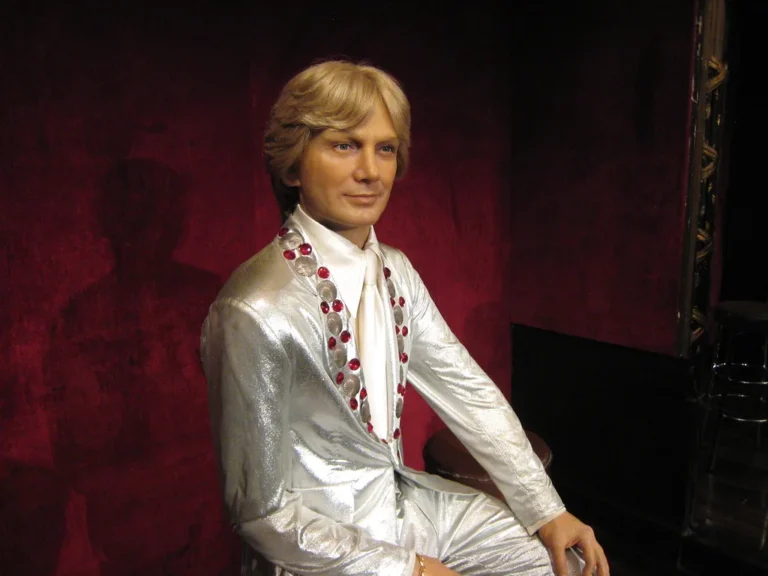

Claude François, often nicknamed Cloclo, remains an enduring icon of French popular music. His rapid rise, marked from the outset by major successes on stage and elsewhere, established his reputation as an exceptional artist.
His departure from Egypt and difficult beginnings laid the foundations for a career shaped by unwavering determination. Yet behind that success was a man with exacting standards, whose legendary perfectionism continues to fascinate and raise questions.
Did this idol of French music truly live in pursuit of perfection, or is that merely a myth sustained by his legend? His story, filled with challenges and achievements, invites us to explore the question.
Introduction
At that time, the French music scene was thriving. The 1960s and 1970s saw the rise of a new wave of artists, including a singer who would leave his mark on the history of French music.
Before an audience eager for something new, he stood out through his distinctive style and charismatic presence. His meteoric rise captivated the media, which helped shape his public image.
His legacy extends far beyond that era and still influences contemporary music. His story, somewhere between myth and reality, continues to fascinate fans and newcomers alike.
| Aspect | Impact | Audience | Music |
|---|---|---|---|
| Role as a singer | Significant | Broad | Innovative |
| Era | 1960s and 1970s | Engaged | Popular |
| Legacy | Lasting | Appreciative | Timeless |
Historical and biographical background
Born in Egypt in 1939, Claude François grew up in a privileged household in Ismailia. His affluent family gave him opportunities to learn and experience culture from an early age.
The nationalization of the Suez Canal in 1956 upended his life. That political event forced his family to leave Egypt and settle in France. The upheaval deeply affected Claude François, influencing his later ambitions and strengthening his resolve.
The loss of his father while he was young also played a key part in shaping him. The bereavement gave him a powerful drive to succeed, as though to compensate for his father’s absence. These experiences shaped his personality and fed his perfectionism.
| Event | Impact | Consequence |
|---|---|---|
| Birth in Egypt | Privileged childhood | Cultural education |
| Exile after 1956 | Loss of his roots | Stronger determination |
| Death of his father | Emotional void | Drive to succeed |
These events made Claude François an artist with exacting standards, ready to take on any challenge in pursuit of excellence.
Musical beginnings and the rise to fame
In 1961, the artist began his musical career with modest but promising beginnings. His first record, “Belles, belles, belles!”, released in 1962, was an immediate success.
His early television and radio appearances, particularly on Europe 1, propelled his career. They introduced him to a wider audience.
The release of his first records in 1962 marked a turning point. “Belles, belles, belles!” became a hit and launched his career.
His subsequent tours and innovative shows, including performances at the Olympia, strengthened his star status. These carefully staged performances captivated audiences.
A spectacular rise and triumph at the Olympia
In 1964, the Olympia became the setting for a resounding success for Claude François. His performances on stage electrified audiences and marked a turning point in his career.
Each performance added to his star appeal. Captivated by his energy and charisma, audiences flocked to his shows. Magazines of the time described the frenzy, with headlines such as “La folie Claude” in March 1964.
Journalists, including Patrick Thévenon, highlighted the originality of his shows. “It’s a real musical revolution,” he wrote. Such coverage brought attention to the distinctive world he created on stage.
Interviews in widely read magazines such as Salut les Copains strengthened his image. Each media appearance, in March or at another time, contributed to his status as an idol.
Every time he stepped onto the stage, he added a new chapter to his story and turned each performance into an enduring success. The Olympia remains a symbol of his rise.
Claude François and his obsession with perfection: myth or reality?
A central question about Claude François concerns his obsession with perfection. Was his relentless pursuit a myth sustained by his legend, or a reality that shaped his life?
Claude François clearly had exceptionally high standards, especially when preparing his shows. He was known, for example, to rehearse certain scenes repeatedly until they were perfect, sometimes leading to angry outbursts.
- He demanded perfection in every detail, from choreography to lighting.
- His repeated routines and occasional outbursts show how demanding he was.
- These behaviors had positive effects, including exceptional performances, but also negative ones, including a turbulent personal life.
To learn more about the life of Claude François and his obsession with perfection, you can read this article, which explores his story in depth.
It is important to distinguish myth from reality in the image of Claude François. Even if he genuinely pursued perfection obsessively, the human side of that pursuit also deserves consideration.
Behind the scenes of perfection on stage
Every electrifying Claude François performance was underpinned by meticulous work. Every detail, movement and second was carefully planned to give audiences an unforgettable show.
Intensive rehearsals and technical discipline
Rehearsals were part of his daily routine. Before each show, hours went into refining the smallest nuance. For his 1964 Olympia performance, for example, he rehearsed for weeks to ensure that every note and dance step was perfect.
His team worked under strict discipline. Musicians and dancers had to follow demanding schedules and meet high technical standards. That rigor paid off, making each broadcast a notable event.
The importance of detail in every performance
Even the smallest detail mattered. From choreography to lighting, everything was precisely coordinated. At a concert in 1965, for example, he insisted that every light come on at exactly the right moment, creating a distinctive atmosphere.
One anecdote is revealing: he would ask a team member to check that a specific technical detail was perfect, even if it meant starting over several times. Such painstaking attention reinforced his reputation as a perfectionist.
This pursuit of perfection dazzled audiences and laid the groundwork for his lasting legacy. To learn more about his influence on contemporary music, you can read this study.
The Claudettes: symbols of innovative staging
In 1966, Claude François innovated by creating the Claudettes, a group of backing singers and dancers who would become a defining feature of his shows. Chosen for their talent and appearance, these young women played a key role in his stage productions.
The Claudettes were more than dancers or backing singers. They embodied a modern, sophisticated image, combining the appearance of models with artistic talent. Their presence added a visual and artistic dimension, turning every performance into a full-scale show.
The selection process was rigorous. Candidates had to be skilled in dance and singing and have the appearance of a model. Once selected, they underwent intensive training to meet the artist’s high standards.
The Claudettes made an immediate impression on audiences and the press. They helped shape the image of Donna Donna, a modern, liberated woman. The media highlighted their style and energy, adding to the shows’ appeal.
This innovation formed part of a wider marketing strategy. With their model looks and talent, the Claudettes became integral to the Claude François brand, attracting a broader and more varied audience.
Personal challenges and the artist’s turbulent life
Throughout his career, the artist faced personal challenges. Despite his success, he had to contend with personal crises and professional setbacks.
Personal crises and professional setbacks
There were many personal crises. He experienced accidents on stage and periods in hospital, for example. These incidents revealed the intense pressures of his career.
- He survived an assassination attempt in 1971.
- These events had a profound effect on his mental and physical health.
The setbacks strengthened his determination. Despite everything, he continued to perform and deliver memorable shows.
Managing stress and the unexpected
Managing stress was part of his daily life. He developed ways to handle the unexpected. For example, he surrounded himself with a close team to help him through difficulties.
At times, stress led to nervous breakdowns. Nevertheless, he always found a way to recover.
| Challenge | Impact | Consequence |
|---|---|---|
| Accidents on stage | Physical injuries | Slower career progress |
| Hospital stays | Health problems | Cancelled concerts |
| Assassination attempt | Trauma | Increased security |
His relationship with his fans was complex. He had to manage their expectations while protecting his personal life. These challenges helped shape his legend.
Business ventures and other activities
Claude François’s ambitions extended beyond the stage. He was also a forward-thinking businessman who launched several ventures that were notable for their time.
In 1967, he founded his own record company, Flèche. The label promoted his music as well as that of other artists.
He also created the magazine Podium, which featured music culture and contemporary trends. The publication strengthened his media influence.
- He launched a range of perfumes, bringing music and fashion together.
- He founded a modeling agency that promoted a modern look.
These ventures, combining music and business, reinforced his status as a cultural icon. His business success complemented his artistic career.
Signature hits and their impact
Claude François left his mark on French popular music with hits that still resonate today. Each song and each release reflects a key stage in his career.
Among his greatest hits is Belles, belles, belles!, released in 1962. It launched his career and sold more than a million copies. It captivated French audiences and attracted international attention.
In 1967, Comme d’habitude became an enduring classic. The song topped the French charts and was adapted internationally, extending his influence on the global music scene.
In 1974, Le téléphone pleure moved listeners with its distinctive blend of melody and emotion. The song marked a turning point in his career, showing his ability to evolve while remaining true to his style.
| Song | Year | Sales | Impact |
|---|---|---|---|
| Belles, belles, belles! | 1962 | 1 million | Launched his career |
| Comme d’habitude | 1967 | 2 million | International success |
| Le téléphone pleure | 1974 | 1.5 million | Artistic recognition |
These songs dominated the charts for years and left a lasting mark on the music industry. With combined sales of several million copies, Claude François showed that his music could stand the test of time.
Media influence and “Cloclomania”
The media played a key role in creating and reinforcing the Claude François myth. Television and radio broadcasts helped popularize his hits, turning each song into an event.
Audiences were won over, and many fans supported his career passionately. For example, more than one million fans attended his concerts, showing the scale of his popularity.
The term Cloclomania captures that collective enthusiasm. Broadcasts played his music and told his story, further strengthening his image.
After his death in March 1978, audiences paid him heartfelt tribute, demonstrating the lasting impact of his media legacy.
- Broadcasts brought his songs to a wide audience.
- Fans supported his career by attending events in large numbers.
- Cloclomania defined an era and passed his legend from one generation to the next.
Anecdotes, scandals and career setbacks
Claude François’s career included dramatic events that captivated the public and the media. One of the most disturbing was the 1971 assassination attempt, which shocked his fans and highlighted the risks that came with fame.
Later, after his death in March 1978, rumors circulated about overseas bank accounts. These allegations tarnished his image, although no concrete evidence was ever presented.
On stage, he faced accidents, including a fall during a concert, that threatened his career. These setbacks strengthened his resolve but also created tension with his team.
Despite these challenges, his legend endured. Fans continued to support him, and his musical legacy remains intact. More than forty years after his death, his influence on French music is still felt.
Sources of inspiration and musical influences
Claude François drew inspiration from a wide range of music. Influenced by legendary artists such as Ray Charles and Elvis Presley, he incorporated elements of Anglo-American music into his distinctive style.
The rise of yé-yé culture in the 1960s also shaped his work. The movement’s memorable melodies and emotive lyrics found a particular expression in his songs. His song Comme d’habitude, for example, reflects that influence in its musical structure and modern arrangements.
His contribution to French music was distinguished by innovation. He adapted international standards and created original songs that helped redefine the music scene of the time. His version of Belles, belles, belles!, for example, captivated audiences with its energy and freshness.
| Influence | Impact on his style | Example song |
|---|---|---|
| Anglo-American music | Modern rhythms and harmonies | Comme d’habitude |
| Yé-yé culture | Memorable melodies | Belles, belles, belles! |
| 1960s rock | Energetic elements | Le téléphone pleure |
These influences shaped his musical world and left an enduring legacy. Every song and performance continues to reflect his taste for innovation and quality, leaving a lasting impression on French music.
The relationship between perfectionism and innovation in live performance
The performing arts owe much to artists who combined perfectionism with innovation. This year, the music industry once again emphasized the importance of both.
As usual, rehearsals were meticulously organized. Each show was planned with almost military precision. For example, eliminating pauses between songs kept the performances moving at a relentless pace and drew audiences further in.

Behind the scenes that year, the shows revealed flawless organization. Teams worked within a strict framework in which every detail was carefully checked. These routines reflected a constant pursuit of excellence.
Later, the innovations introduced transformed the venue into a distinctive space. Audiences enjoyed unforgettable experiences, with every highlight precisely orchestrated. Critics noted the effect this approach had on the quality of the performances.
In conclusion, perfectionism led to innovations and redefined standards in live entertainment. The drive to surprise audiences and innovate left a lasting mark on the industry.
| Influence | Innovation | Impact |
|---|---|---|
| Perfectionism | No pauses | Sustained pace |
| Military-style organization | Careful staging | Complete immersion |
| Pursuit of excellence | New formats | Distinctive experience |
The lasting legacy and posthumous influence of Claude François
Long after his death in March 1978, the legend of Claude François continues to resonate across French music. His legacy, marked by record sales and tributes, testifies to his lasting impact on popular culture.
Impact on French popular music
Hits such as Belles, belles, belles! and Comme d’habitude remain essential touchstones. Selling millions of copies, these songs defined their era and continue to inspire new generations of artists and fans.
The strong bond between Claude François and his fans has endured. His honorary children, sons and daughters continue to celebrate his spirit and music, passing his legend from generation to generation.
Passing his legend to future generations
The grave of Claude François in Dannemois cemetery has become a place of pilgrimage for his admirers. This channel of connection between the artist and his audience symbolizes an enduring bond and strengthens his legacy.
To learn more about the influence of Claude François on contemporary music, you can read this study, which examines his impact in depth.
Conclusion
Through this year and decades of resounding success, Claude François’s legacy continues to resonate. His journey, from his early days as a dancer to signature hits such as Le téléphone pleure, reflects an extraordinary career. Each year and era helped shape an enduring musical legend.
If we ask how that legend has lasted, the answer may lie in his ability to combine innovation and excellence. His influence on dance and live performance is undeniable, as is his impact on the course of French music.
We invite you to discover, or rediscover, this exceptional artist’s work and story. To learn more about his life and legacy, visit www.claudefrancois.fr, a site dedicated to his memory and music.
FAQ
What are Claude François’s most famous songs?
What did Claude François do before becoming a singer?
What made Claude François distinctive on stage?
Why was March 1978 important in his life?
How did Claude François manage pressure and stress?
What is Claude François’s legacy today?
What was his relationship with his fans like?
What inspired Claude François?
What role did his family play in his career?
Source links
- https://en.wikipedia.org/wiki/Philippe_Sarde
- https://theartsdesk.com/new-music/france-remembers-claude-francois
- https://medias.unifrance.org/medias/104/108/93288/presse/my-way-presskit-english.pdf
- https://www.nts.live/artists/1077-claude-francois
- https://www.mychansonfrancaise.com/claude-francois-profile
- https://en.wikipedia.org/wiki/Claude_Fran%C3%A7ois
- https://theartsdesk.com/new-music/france-remembers-claude-francois
- https://www.nts.live/artists/1077-claude-francois
- https://medias.unifrance.org/medias/104/108/93288/presse/my-way-presskit-english.pdf
- https://www.mychansonfrancaise.com/claude-francois-profile
- https://en.wikipedia.org/wiki/Nouveau_roman
- https://theartsdesk.com/new-music/france-remembers-claude-francois
- https://www.nts.live/artists/1077-claude-francois
- https://medias.unifrance.org/medias/104/108/93288/presse/my-way-presskit-english.pdf
- https://www.mychansonfrancaise.com/claude-francois-profile
- https://en.wikipedia.org/wiki/Claude_Fran%C3%A7ois
- https://en.wikipedia.org/wiki/Bj%C3%B6rk
- https://theartsdesk.com/new-music/france-remembers-claude-francois
- https://www.nts.live/artists/1077-claude-francois
- https://medias.unifrance.org/medias/104/108/93288/presse/my-way-presskit-english.pdf
- https://www.mychansonfrancaise.com/claude-francois-profile
- https://en.wikipedia.org/wiki/Claude_Fran%C3%A7ois
- https://theartsdesk.com/new-music/france-remembers-claude-francois