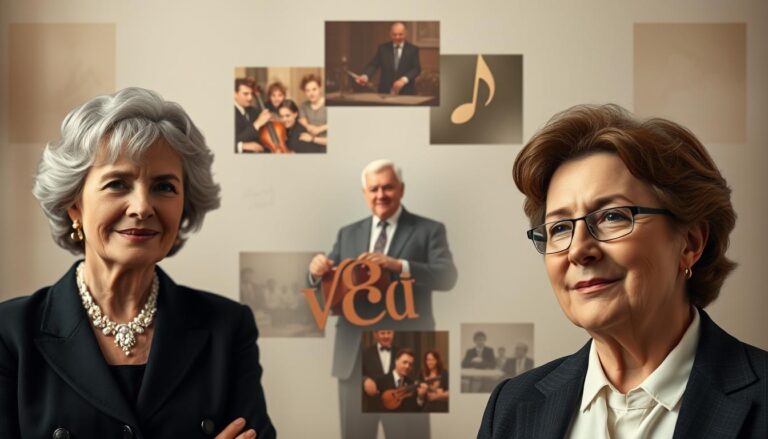

Introduction — A portrait of a British artist who became a figure in French entertainment. This woman spent much of her life and career in show business, from the 1960s to the 1980s.
First a stage performer and then a singer, she made her mark at venues such as the Sporting Monte-Carlo and the Olympia. Her connections with popular figures reflect a career spanning the spotlight and studio work.
This introduction sets out the article’s main themes: biographical milestones, her work as a dancer and then a singer, her widely publicized private life and her artistic shifts. What to expect: a structured biography focused on her artistic contributions rather than sensationalism.
The following sections cover key dates (birth and death) and significant stages in Monaco, Paris and Montmartre, to show what happened onstage and what took shape behind the scenes.
Biographical milestones in Janet Woollacott’s life
At a glance: birth name, Janet Edith Woollacott; born on 4 November 1939 in Carlton (Nottinghamshire, United Kingdom); British nationality. Principal occupations: dancer and singer, active mainly in France.
Birth and entry into show business
From a small town in Nottinghamshire, she left England to try her luck on French stages. Her first engagements came through clubs, orchestras and music halls, which served as springboards for performers at the time.
Death and burial
She died on 11 November 2011 in Clamart (Hauts-de-Seine). At her death, she was 72 years old. She is buried in Clamart cemetery.
Her professional life is often discussed later in accounts involving Claude François, Bécaud or the Olympia, which helps explain the lasting interest in her career.
Janet Woollacott: stage dancer, television and behind the scenes
Her first contracts on the French Riviera gave her experience in live performance and orchestral work. Clubs demanded a great deal of performers. Orchestras, such as the one at the Sporting Monte-Carlo, served as practical training grounds for artists.
French Riviera clubs and the Sporting Monte-Carlo
At these venues, she learned the discipline of rehearsals and how to manage stage fright. It was at the Sporting in 1959 that she met Claude François, then a drummer. The meeting marked a turning point in her professional and personal life; their relationship became an important part of her story.
The Olympia and Arthur Plasschaert’s ballet company
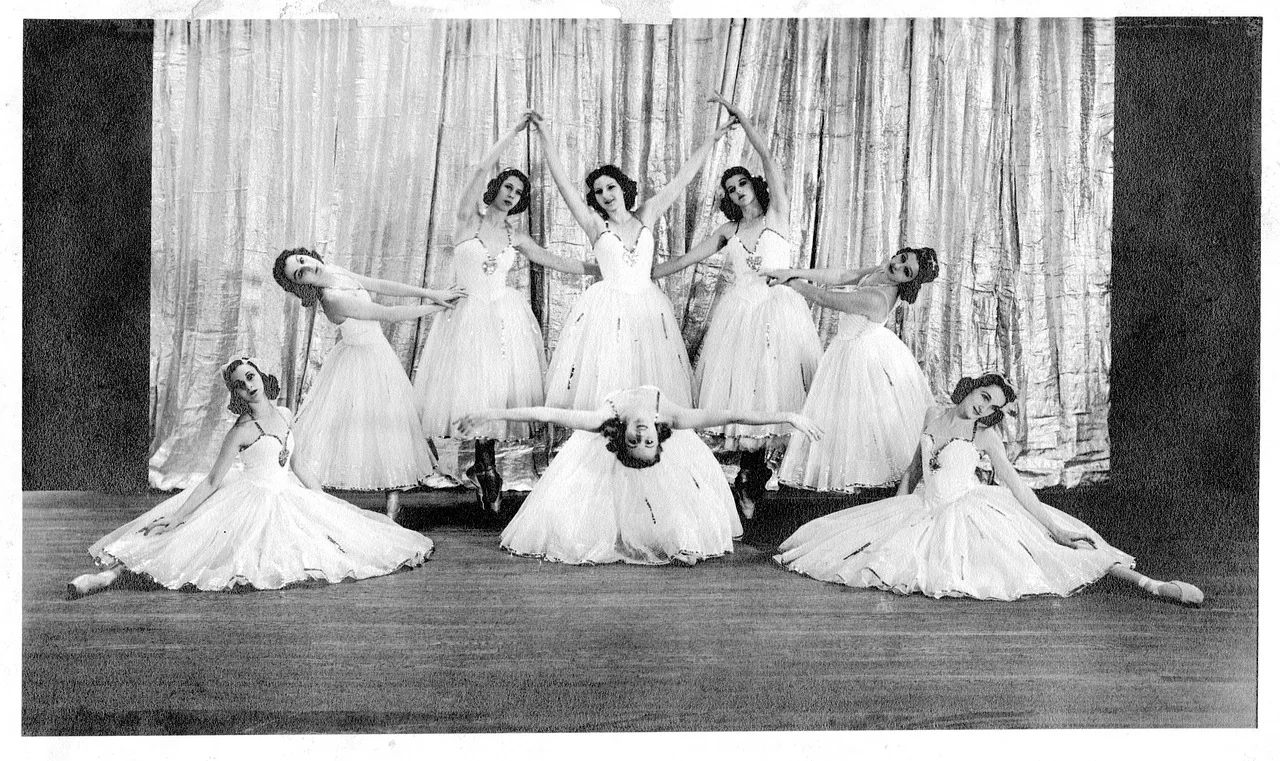
In 1962, hired as a dancer at the Olympia, she joined Arthur Plasschaert’s ballet company. The Olympia brought her prestige, media exposure and access to major collaborations.
An artist working onstage, in the media and behind the scenes
Live entertainment depends on a less visible network of choreographers, producers and directors. Television sometimes gave these careers a wider audience and shaped their public narratives. The Olympia thus became a place where artistic and personal relationships developed.
| Venue | Role | Impact |
|---|---|---|
| French Riviera clubs | Stage training | Technique, stamina |
| Sporting Monte-Carlo | Orchestral work and new connections | A pivotal meeting (1959) |
| Olympia | Professional ballet performances | Visibility, collaborations |
For a closer look at the personal side of this period, read this article about a defining relationship of the time: a look back at the relationship.
Claude François, his only wife and the pivotal years
The marriage to Claude François marked a turning point. They met in 1959 at the Sporting Monte-Carlo. Their civil wedding took place on 5 November 1960 at Monaco’s town hall, with Rolland Chakour and Renaud Schulze as witnesses.
In 1961, the young couple moved to Montmartre on the advice of Sacha Distel and Brigitte Bardot. Life in Paris increased their media exposure and everyday pressures.
Public pressures and private life
The couple’s relationship grew strained: jealousy and possessiveness led to conflict. Separation loomed despite attempts at reconciliation.
The breakup is said to have inspired the song “Je sais” (1964). A public reconciliation of sorts came in September 1964, when Bécaud and Woollacott congratulated Claude François after a performance at the Olympia.
Divorce and remembrance
The divorce was finally granted on 13 March 1967. Those years, often described as the forgotten years, remain a key chapter in her biography.
France Gall’s presence at the time highlights the media backdrop. Woollacott later revisited those years in a book to shed light on that period of her life.
Gilbert Bécaud, Jennifer Bécaud and her life after the breakup
The Olympia played a central role: it was on that stage that she met Gilbert Bécaud in 1962. What began as a professional encounter became a significant relationship lasting about four years.
The birth of Jennifer Bécaud in 1968 was the defining event of this period. Their daughter, later known as Jennifer Kay, represents a family legacy connected to French song.
After the separation, her life took a new direction. She rebuilt her life, made personal choices and continued artistic collaborations without pursuing fame at any cost.
Several marriages followed: first to Jean-Paul Barkoff, then to Jean Sarrus, and finally to Dominique Perrier. These marriages also influenced her musical career and projects.
In summary: the years with Bécaud remain central, both because of the birth of their daughter and because they brought her into an artistic circle. For a detailed biographical overview, see this full profile.
From dancer to singer: songs, collaborations and discography
The stage had given her presence; the studio gave her a voice and a way to leave a record of it. The move from stage to recording is often driven by a wish to leave a lasting mark and explore songwriting.
In 1970, using the name “Janet,” she entered the studio with Jean Sarrus. They recorded “Je t’aime… normal” and “Super-gangsters,” with lyrics by Gérard Rinaldi. These first recordings marked the beginning of a musical career.
The 1972 shift: “Bénie soit la pluie” and “Le chocolat”
In 1972, her collaboration with Dominique Perrier produced “Bénie soit la pluie (Sugar me)” and “Le chocolat.” The songs stand out for their carefully crafted arrangements and blend of French and Anglo-American influences.
Duets, film and later projects
Her artistic collaboration with Dominique Perrier continued. In 1985, she contributed “Mama” and “The dream” to the soundtrack of Adieu blaireau. The soundtrack linked her pop career to film and raised her profile.
Later, from 1994, she collaborated with Stone Age and contributed to Space Art projects (credits for lyrics and vocals on Play Back in 1980 and Space Art Tribute – Dominique Perrier Project in 2011). These projects show that her artistic work continued beyond the 1970s.
A brief discography in context
- 1970 — Duet with Jean Sarrus: “Je t’aime… normal,” “Super-gangsters” (studio recordings under a stage name).
- 1972 — With Dominique Perrier: “Bénie soit la pluie,” “Le chocolat” (a distinctive sound and identity).
- 1985 — Soundtrack: “Mama,” “The dream” (the film Adieu blaireau).
- From 1994 — Collaborations with Stone Age and contributions to Space Art (lyrics and vocals credits).
In short, her move into singing enriched her artistic legacy. Far from erasing the “forgotten years,” these records make them audible and reaffirm her place among the artists of her era.
For more context on some of these personal and artistic connections, see the page devoted to Claude François.
Conclusion
Janet Woollacott followed a consistent path: born in 1939, she combined stage presence with studio work. Her professional life took her from French Riviera clubs to the Olympia, then to recordings in the 1970s and 1980s.
She died in November 2011 in Clamart, aged 72. This biographical milestone brings the focus back to a career that built on her early experience.
Her legacy includes a focused discography, lasting collaborations and a family connection through her daughter. For a factual summary, see her wiki profile.