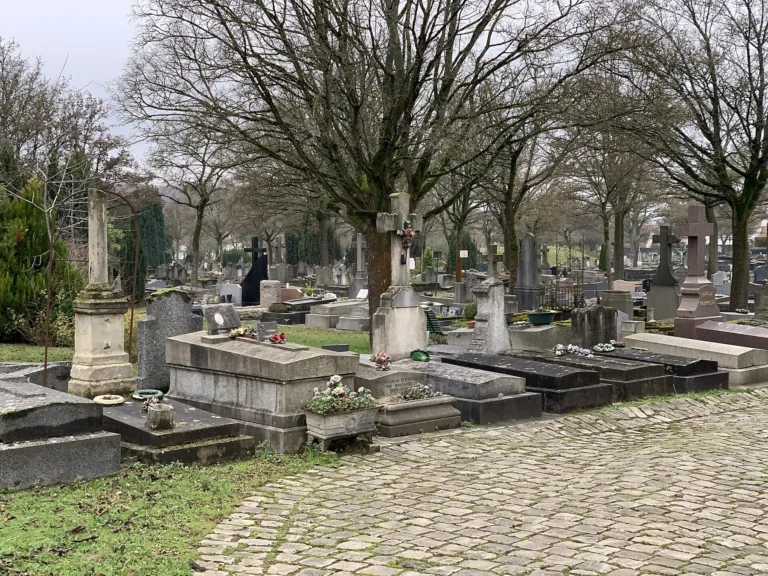

Purpose: to provide clear information for a respectful visit, without sensationalism or rumors.
This question comes up often because public searches concern the memory of well-known people. Visiting a grave means respecting rules, legal requirements, and customary discretion.
We do not provide “viral” routes or details that could expose relatives. The focus is on verifiable information, caution, and respect for the people concerned.
In this guide: who Janet Woollacott was, how to verify a source, how to prepare for a visit in France, rules at the site, safety and legal considerations, and a method for countering rumors.
Read critically: distinguish facts, interpretations, and media narratives. This approach helps avoid common mistakes about public figures.
Who Janet Woollacott was and why people search for her grave
Janet Woollacott often appears in accounts of the yéyé music scene. She is associated with a particular moment in the media, often linked to a popular star of the 1960s and 1970s.
A figure connected to media history
Her name appears in articles, archives, and forums. This fuels online searches and the curiosity of music history enthusiasts.
What is known as fact and what the media repeat
Verifiable facts: dates, official documents, and identifiable quotations. Sticking to these helps avoid speculation.
“A search is not proof; repetition does not establish a fact.”
- Interest stems from a mix of articles, archives, and fans’ accounts.
- Many stories have circulated for years; verification remains essential.
- Private life was often presented as a spectacle, creating confusion.
| Item | Reliable sources | Risk of distortion |
|---|---|---|
| Dates | Records, archives | Low |
| Public relationships | Contemporary press | Medium |
| Fans’ accounts | Forums, personal accounts | High |
Janet Woollacott’s grave: practical information and precautions
For anyone who is curious or wants to respect the site, this guide offers practical guidance.
Who this guide is for and when it may help
Intended readers: visitors seeking reliable information before a visit, readers planning a trip, and curious people who want to know what precautions to take.
Possible uses: planning a journey, avoiding a mistaken identification, knowing what to do if access is limited, or behaving respectfully at the site.
What this article cannot guarantee without official sources
Limitations: this article cannot guarantee a location’s accuracy without a primary source, the condition of a grave on a given date, or whether a cemetery is open.
The main reason for this caution is to avoid sharing sensitive information and spreading unverified claims.
Before setting out, ask the right question: which official or primary source confirms this information?
Before you go: verify the information and avoid common mistakes
A simple check beforehand can turn an impulsive visit into a respectful, well-informed one.
Cross-check details against reliable sources
How mistakes arise: information copied and repeated from one source to another eventually seems true despite having no primary source.
To avoid this, check details with the town hall and cemetery administration, accessible registers, press reports that cite their sources, and dated archives.
Be wary of sensational content
Caution: avoid “mystery” videos, alarming headlines, and dramatized accounts that favor spectacle over accuracy.
A common example is confusion between towns, two people with the same name, or an “alleged grave” identified without a dated, contextualized photograph.
Take care with shared directions
Routes posted on social media may lead to sensitive areas or locked gates. Check when they were posted and whether they have been updated.
Practical tip: keep a record of links, screenshots, and dates to distinguish a story from verified information.
“Cross-checking remains the safest way to turn a search into reliable information.”
Location and access in France: what to prepare
To organize a respectful visit, seek information from municipal services instead of publishing exact addresses. This limits the spread of sensitive details and protects relatives.
Identify the town and check access
Good practice: contact the town hall or cemetery service to confirm the town and entry arrangements.
Do not rely on forums. Official sources provide the safest information.
Opening hours, parking, and rules
- Check seasonal opening hours and weekly closures.
- Ask about wheelchair access, entrances, and permitted parking.
- Find out about local rules on animals, items left at graves, and upkeep.
Plan for crowds and seasonal conditions
The condition of paths can vary with the season: rain, leaves, or ice can make it harder to find your way.
Commemoration days and weekends draw many people; be discreet and have another option in mind—another time, a call beforehand, or postponing your visit—if access is restricted.
A quick call to the municipality can often prevent a poorly planned visit.
At the site: rules for a respectful visit
At the site, respect for other visitors should guide everything you do and say. Behave with restraint. This helps preserve the quiet atmosphere and the opportunity for reflection.
Discretion, quiet, and respect for other families
Speak softly. Move calmly and avoid noisy groups.
Remember: a cemetery is a place where families and other visitors come to pay their respects.
Photos and videos: permission and good practice
Check the posted rules before taking pictures. Avoid including people or neighboring grave markers in the frame.
Good practice: frame your shot closely and ask permission from anyone who appears in it.
Flowers, objects, and messages: what is generally accepted
Keep anything you leave modest. Do not attach items where this is prohibited, and avoid bulky objects.
Take your rubbish with you. Limit ribbons and plastic items to avoid clutter.
“Respect means not turning a grave into a backdrop.”
| Behavior | Advice | Why |
|---|---|---|
| Voice | Keep it low | Respect for families |
| Photos | Frame closely | Protection of privacy |
| Items left at the grave | Keep them modest | Avoid clutter |
| Rubbish | Take it with you | Keep the site clean |
Note: these practical tips help visitors use common sense when paying their respects.
Safety precautions during your visit
Thinking about your safety helps you visit responsibly.
Visit during the day and stay in frequented areas
The reason is simple: daylight improves visibility, and the presence of other people reduces risks.
Use the main paths and frequented areas. If you are alone, avoid isolated paths.
Keep an eye on personal belongings and camera equipment
Bring the essentials: suitable shoes, water in summer, and clothing appropriate for the weather.
A practical point: keep your bag closed, your phone out of sight, and your camera secured. Do not leave valuable equipment exposed in one place for long.
Limiting your time at the site and avoiding a “hunt” helps prevent you from wandering into remote areas.
If in doubt, politely ask a member of staff for directions. This is often safer than following unverified information found online.
| Situation | Recommended action | Why |
|---|---|---|
| Visit | Go during the day and use the main paths | Better visibility and other people nearby |
| Equipment | Shoes, water, suitable clothing | Comfort and safety on uneven ground |
| Personal belongings | Closed bag, secured camera | Lower risk of theft or loss |
| Directions | Ask staff | Reliable information and saved time |
To strengthen your critical approach before a visit, read a critical investigation that shows why every claim should be checked.
Legal and ethical considerations concerning graves
Beyond the visit itself, following the rules protects the memory of the deceased and their relatives. Each cemetery publishes rules on opening hours, photography, items left at graves, and movement around the site. These rules apply even when a grave is known to the public.
Respect the rules and public property
Follow posted signs and staff instructions. Do not cross barriers or disrupt a ceremony, and use the main paths.
Image rights and privacy
Do not publish images of faces, neighboring grave markers, or details that could identify people present. If an image could expose someone else, do not share it.
The limits of “celebrity tourism” and publishers’ responsibilities
Having a public figure buried at a site does not justify intrusion or sensationalism. Publishing information means accepting responsibility for the social and legal consequences of sharing it.
“What happens to society when we turn a place of remembrance into content?”
- If a photograph compromises someone else’s privacy, do not share it.
- Prioritize verifiable information and respect for families.
- Authors should consider the consequences before publishing.
The media dimension: how a grave becomes a subject of interest
Through repetition and storytelling, the media sometimes turn a quiet place into a subject of public interest.
Information, narrative, and presentation
Three levels need to be distinguished. Information is what can be verified, such as dates, sources, and official records.
A narrative brings details together to form a story. The presentation draws on emotion and the conventions of spectacle.
How articles and criticism shape meaning
An article selects and ranks details, then guides how readers understand the subject. Criticism can add context, but it sometimes amplifies a single interpretation.
- Signs of overinterpretation: no primary sources, speculative wording, and promises of an “exclusive.”
- Effect of presentation: repeated images and dramatic headlines that turn a fact into a spectacle.
- Result: audiences remember the story more readily than the verifiable information.
What readers can do: look for factual information first, then examine how the article creates meaning. Criticism remains a useful filter when it puts sources ahead of effect.
What critical and academic studies teach us about “truth claims”
Academic studies show that a “truth claim” is not absolute truth but the result of a method. It rests on sources, standards of argument, and careful contextualization.
Aesthetic criticism and pluralist approaches
Aesthetic criticism emphasizes taste, the creator, and the work, particularly in the auteur thinking associated with Truffaut. Pluralist approaches examine social context, genre, and images. Both perspectives are useful.
Avoid jargon, but keep the method
When reading an academic text, identify its argument and evidence. Check its references: issue number, date, and publication.
- Define key terms.
- Identify the academic discipline.
- Check quotations and sources.
For a broader perspective, compare criticism with research in information science.
From “taste” to analysis: how to read a text
You can enjoy a film without relying on taste alone. Support your judgments with evidence, provide context, and cite your sources precisely.
“A judgment without a source remains an opinion; an analysis recognizes that.”
Avoiding rumors: a simple method for research and analysis
Starting research with good habits prevents rumors from taking hold. Here is a short, easy method for checking a claim before sharing it.
Find primary sources and verify quotations
A five-step method:
- Identify the precise claim.
- Look for the primary source: a register, record, archive, or original publication.
- Check the quotation: who said what, when, and where?
- Cross-check it against an independent source.
- Attach a precise date to the information.
Distinguish fact, interpretation, criticism, and opinion
A fact can be supported by a document. An interpretation can be debated; criticism defends a judgment with arguments; an opinion expresses a preference.
Dates and common inconsistencies
Phrases such as “in the late 1960s” can lead to shifts in chronology. Always specify a verifiable date or event.
- Common inconsistencies: conflicting dates, confused locations, and quotations with no named speaker.
- Keep a simple table with the source, date, link, and extract to support your analysis.
Caution protects real people, their families, and places of remembrance.
Historical context: dates, the era, and biographical details to know
The 1960s provide essential context for understanding why some stories became so widespread.
At the time, the music scene was flourishing: newspapers, television programs, and radio broadcasts multiplied profiles and rumors. Artists’ growing fame increased their visibility and left archives that are sometimes incomplete.
The media moment of the 1960s and the couple in the spotlight
When a duo or couple enters the spotlight, the media quickly produce parallel accounts. Those stories may differ depending on the source.
Result: conflicting versions circulate, especially when the press favors emotion over precision.
What popular accounts remember and what they leave out
Public biographies often focus on dramatic episodes, like anything that attracts attention, and leave out more ordinary facts of daily life.
To reduce errors, note the years, ages, and dates of public events. Connect them to dated documents: contemporary articles, official records, or audiovisual archives.
Media repetition sometimes creates the story; verification helps restore the chronology.
To explore the history more deeply and improve your method, consult specialist sources, such as a book on documentation methods.
Also consult this practical guide to assessing sources: resources and archives.
If you visit “later”: prepare without unpleasant surprises
Visiting later calls for a brief check because places change over time. In a few months or years, paths may be in a different condition. There may be construction work, partial reopenings, or temporary closures.
Reopenings, construction work, and changed routes
Before leaving, check the municipal website or official notices. A quick call to the relevant service can confirm opening hours and access conditions.
Plan for changes: relocated entrances, closed areas, and different parking arrangements. These can make the visit take longer.
Options if access is restricted or the grave is hard to find
- Postpone your visit if access is limited.
- Ask staff at the site for information instead of searching on your own.
- Use the site’s official map, if one is available, and respect private areas.
If in doubt, choosing not to visit is a reasonable option. Any visit should end quietly and with respect for the site.
| Situation | Action | Result |
|---|---|---|
| Construction work in progress | Contact the town hall | Avoid a wasted trip |
| Restricted access | Choose another time | Reduce disruption for families |
| Paths divided or rerouted | Get the official map | Save time locating the grave |
Visiting tips for enthusiasts of culture, cinema, and history
A visit can become a thoughtful cultural experience rather than a search for an immediate emotional reaction.
Connect the visit to cultural exploration without sensationalism
Focus on context: place the site in its era, consult a reading list, and listen to programs that explain the media scene.
Avoid seeking a “shocking moment”: focus on archives, contemporary articles, and scholars’ analyses to deepen your understanding.
Limit the crowd effect and take a restrained approach
Choose quiet hours, come alone or with one other person, and limit your time at the site.
- No reenactments or loud speeches.
- No videos designed to create a sensational effect.
- A simple tribute, if permitted, is enough; leave quietly.
“A restrained approach protects the memory of the deceased and the peace of other visitors.”
Writing, publishing, and documenting: precautions before sharing an article or post
Before publishing, take a moment to assess the real consequences of your words for the people concerned.
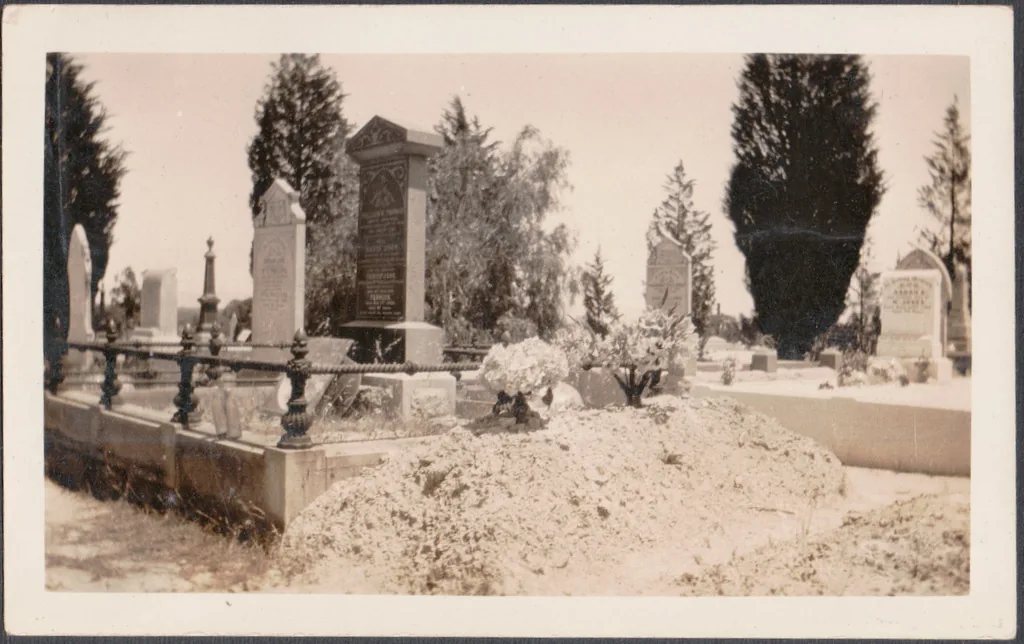
Protect relatives
Do not publish details that could identify relatives: visible names, neighboring grave markers, faces, or vehicle registration plates.
Provide context to avoid misleading shortcuts
Specify what is certain, what remains probable, and what lacks evidence. Avoid definitive headlines that turn a question into a certainty.
Checklist before posting online
- Blur faces and registration plates.
- Remove file metadata.
- Remove exact coordinates or landmarks that could be used to locate the site.
- Reread the text while imagining how a malicious person might use it.
Credit sources and acknowledge uncertainty
Cite sources, dates, and authors. Make clear which source supports each point.
“A publication can be mistaken for proof if the media amplify it; careful work prevents manipulation.”
| Risk | Recommended action | Why |
|---|---|---|
| Identification | Blur images | Protect privacy |
Useful resources for further research without turning to “spectacle”
A focused reading list helps distinguish rigorous criticism from media hype. It offers a methodical way to read controversies.
Recommended works and articles
One concrete example: issue 698 of Cahiers du cinéma, published in March 2014, offers a useful example for learning to read a controversy and identify editorial choices.
Further reading: journal articles, essays on auteur theory, and texts by Bellour or Bazin provide historical reference points.
Reference points in information and communication studies
On questions of knowledge and method, Bertrand Cabedoche’s 2016 article shows how information and communication studies can help readers step back from media narratives.
Read the introduction, identify the main argument, and note the sources: these simple steps help avoid one-sided readings.
Practical method:
- Start with a peer-reviewed article.
- Compare at least two approaches: aesthetic criticism and visual studies.
- Note the references and dates before sharing.
| Type | Example | Use |
|---|---|---|
| Journal | Cahiers du cinéma, issue 698, March 2014 | Analyze a controversy |
| Essay | Works on auteur theory | Historical and aesthetic context |
| Information and communication studies | Cabedoche, 2016 | Knowledge and method |
Conclusion
In closing, remember that responsible research matters more than sharing sensitive details. This information should guide every action and publication.
Keep three principles in mind: verify sources, respect the site, and consider safety and legal rules. Before leaving, confirm access through official channels, then adapt your visit to the answer you receive. This simple information helps prevent mistakes and intrusions.
Finally, choose cultural curiosity over spectacle. The real meaning of a visit lies in discretion and care. When sources are lacking, accept uncertainty instead of filling the gaps with a story.