
Aim: to bring together verifiable information about the dancer-turned-singer’s partners, marriages and private life, without going beyond public sources.
Born in the United Kingdom in November 1939, she followed a path that took her to the French Riviera, Monaco and then Paris, placing her in the story of French music from the 1960s to the 1980s. This brief biographical background helps explain why her name often appears in accounts of major figures in French popular music.
Public interest centres on two notable facts: her marriage to Claude François and her long relationship with Gilbert Bécaud, with whom she had a daughter. Other, less public marriages complete the picture of her personal life.
This article follows a clear chronology: her origins and career; her relationship with Claude François, from their meeting and marriage to their separation; her relationship with Bécaud; her later marriages to Barkoff, Sarrus and Perrier; and her artistic career beyond her personal life.
Scope of this article: public facts, including dates, places and events, are distinguished from reported accounts. Verifiable sources take priority, including the biography on her dedicated page.
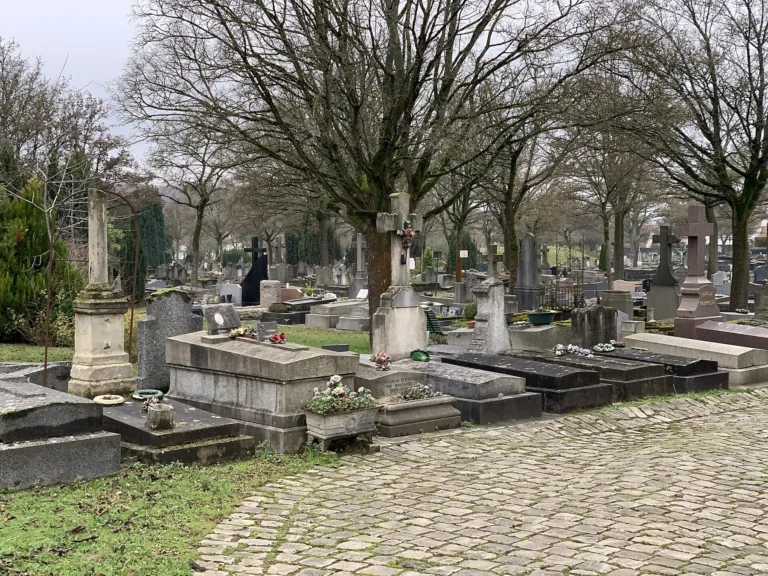
One established point in the chronology is her death in Clamart in November 2011 and her burial there. The conclusion returns to her legacy and musical collaborations.
Who was Janet Woollacott? Biographical background and origins
Originally from the United Kingdom, she was born on 4 November 1939 in Carlton, Nottinghamshire. The daughter of Leonard Arthur Woollacott and Clarice Edith Burton, she was a British national before gradually settling in France.
After arriving on the French Riviera in the late 1950s, she quickly found work as a dancer in local clubs and cabarets. At the time, this scene was a meeting place for musicians and emerging artists.
Her first steps as a dancer required discipline, rehearsals and a network of contacts. Her many engagements opened doors to major venues and led to important meetings.
From the French Riviera to the Sporting Monte-Carlo
At the Sporting Monte-Carlo, she worked with various orchestras and took part in evenings attended by young musicians. It was in this setting, in 1959, that she met a promising drummer who would become a major name in French popular music.
That meeting marked the start of a shared story between an artist already performing on stage and a man seeking a career. They became a couple and soon married, as the next section recounts.
For more on the musician’s career, see the page dedicated to Claude François.
Janet Woollacott and Claude François: meeting, marriage and separation
Her relationship with Claude François included a civil ceremony, a move to Paris and tensions frequently described in published accounts.
A wedding in Monaco in November 1960: ceremony and witnesses
The wedding took place on 5 November 1960 at Monaco’s town hall. Relatives and musician friends were among those present. The named witnesses were Rolland Chakour and Renaud Schulze.
Moving to Paris in 1961: Montmartre and ambition
The couple settled in Paris in 1961, in Montmartre. Their life together combined daily routines with artistic plans. The future singer built his career there while his wife continued performing, notably at the Olympia in 1962.
Jealousy, separation and an artistic legacy
Several biographies describe jealousy and possessiveness that may have strained the relationship. Their emotional separation came before their divorce, which was granted on 13 March 1967.
The song “Je sais” (1964) is often linked to this broken love, though the connection is not certain. Despite the tensions, an episode at the Olympia in September 1964 suggests a cordial reunion: Bécaud and Janet Woollacott went backstage to congratulate Claude François, with France Gall also present.
| Event | Date | Place | Notes |
|---|---|---|---|
| First meeting | 1959 | French Riviera / Monte-Carlo | Start of the relationship |
| Civil wedding | 5 November 1960 | Monaco town hall | Witnesses: Rolland Chakour, Renaud Schulze |
| Move | 1961 | Montmartre, Paris | Shared artistic ambitions |
| Divorce | 13 March 1967 | France | They had separated earlier |
For archival images and background, see this gallery: photos and archives.
Her relationship with Gilbert Bécaud: a story that began at the Olympia
A new chapter in the dancer’s personal life began at the Olympia in November 1962. As a member of Arthur Plasschaert’s ballet company, she shared the stage and backstage spaces with guest artists.
In this professional setting, Gilbert Bécaud, already an established star, won her over while he was separated from Monique Nicolas. Seeing each other regularly soon brought them closer.
They became a couple covered by the celebrity press. For about four years, their relationship was both public and partly private: public appearances existed alongside moments kept out of view.
In 1968, their daughter, Jennifer Bécaud, was born. She was the singer’s only child. Her birth marked an important stage in Woollacott’s life; Jennifer, later known as Jennifer Kay, carried on a musical legacy.
The end of the relationship is reported without a clear account of its causes. After their separation, Woollacott married again, as discussed in the next section.
For more on Gilbert Bécaud’s career, his dedicated page provides useful background.
Janet Woollacott: partners, husbands and private life—what we know
After her years with Bécaud, Woollacott’s married life took several turns, some public and others more private. The documented facts show that she was Claude François’s former wife and later married several more times.
Jean-Paul Barkoff: a more private marriage
Jean-Paul Barkoff appears in published accounts as a husband about whom little is known. Dates and public accounts of their marriage are scarce.
Without sources, only verifiable details can be included.
Jean Sarrus (Les Charlots): a duo and a life together
Her marriage to Jean Sarrus brought together her personal life and career. Their musical duo, around 1970, gave this period greater public visibility.
This period shows how a relationship can also lead to a shared artistic project.
Dominique Perrier: her final marriage and a lasting collaboration
Dominique Perrier is described as Janet Woollacott’s last known husband and a long-standing musical partner.
Their marriage went hand in hand with specific collaborations that connected her personal life with her artistic work.
For more on public accounts of this generation and some of its notable episodes, see this article about relationships and parentage: Claude François and family ties.
Career: dance, singing and writing beyond her relationships
Beyond her connections to famous people, she had an artistic career of her own.
The Olympia: a springboard for her stage career
As a dancer in Arthur Plasschaert’s ballet company, she gained discipline and visibility on the Olympia stage. The professional contacts she made there led to lasting collaborations.
The 1970s and 1980s: from duo to solo work
Moving into recorded music marked a turning point. In 1970, she sang duets with Jean Sarrus (“Je t’aime… normal”, “Super-gangsters”). Her solo singles in 1972 (“Bénie soit la pluie”, “Le chocolat”) show the direction her musical career took.
Projects with Dominique Perrier
Her collaboration with Dominique Perrier produced tracks for the film Adieu blaireau (Mama, The dream, 1985). Her contributions to Stone Age from 1994 and her work with Space Art (Play Back 1980, Tribute/Project 2011) show her continued involvement in music.
Writing and remembrance
In 1998, the book Claude François, les années oubliées, co-written with Christine Reynolds, revisited the singer’s early years. The book added another form of artistic work to a career spanning many years.
Conclusion
Her life brought together public relationships and artistic choices.
The established facts include a marriage to Claude François in November 1960, a separation followed by divorce in March 1967, and several later marriages. These dates help trace her life without speculation.
Her relationship with Gilbert Bécaud, which began at the Olympia, led to the birth of their daughter Jennifer in 1968. This personal chapter unfolded alongside her continuing artistic work.
First a dancer and then a singer, her career spanned many years and included collaborations and a book published in 1998. Her name remains associated with these projects as well as with her relationships.
She died in Clamart in November 2011, leaving a musical legacy reflected in her recordings and collaborations with well-known artists.